
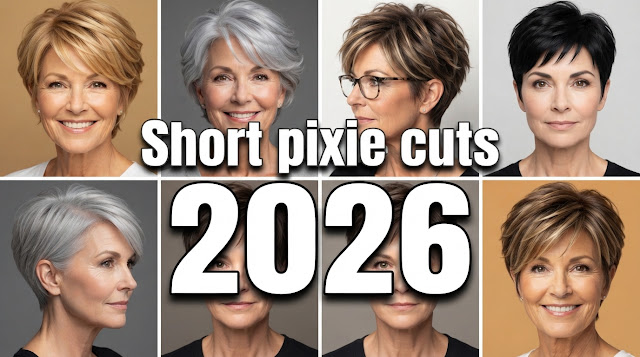

15 Pixie Cuts for Older Women That Take Years Off Your Look
Most pixie cut galleries show the same thing: thick glossy hair on a model in her twenties. But hair after menopause behaves differently. Density shifts texture changes, and a cut that looks great on young hair can end up flat severe or growing out in a shape nobody wanted. This guide starts exactly at that gap — because the right pixie absolutely exists for mature hair it just needs the right cutting technique and realistic expectations going in.
Not every pixie flatters grown-up hair in the same way. Some are built to fake volume that fine hair has lost, some need almost no daily effort, and some stay polished without ever looking stiff. Below are 26 cuts organized into the three qualities that actually matter for mature hair: volume-building, low-maintenance, and polished-classic.Textured Pixies Built to Add Volume for Fine Hair
These cuts rely on short choppy layers at the crown piece-y ends that separate instead of clumping together and a lifted top that holds its shape without backcombing. If your hair has lost density over time or goes flat by early afternoon one of these styles can fake thickness without piling on heavy product.
1. Choppy Espresso Pixie with Wispy Fringe

Short feathered layers sweep around the forehead and temples opening the face without fully covering it. Piece-y undone texture at the crown lifts the roots for the illusion of thicker hair while deep espresso brown adds visual density and the wispy fringe softens any harsh lines. A dry texturizing spray at the roots before bed paired with a silk pillowcase builds movement overnight. Flatters oval heart-shaped and square faces especially well.
2. Undercut Sweep with Long Top Layers

Sides and nape stay very short for a clean sharp silhouette while the top layers grow long and sweep sideways building height and a soft asymmetrical line across the forehead. Blow-dry the top forward first then flip it back with your fingers to set the volume and stop it collapsing at the part. Icy platinum against the closely cropped sides makes the whole style feel deliberate. Works beautifully on oval heart-shaped and square faces.
3. Soft Silver Tousled Crop

Piece-y feathered layers create a soft, airy texture with no heavy fringe just short wisps skimming the forehead. Silver blonde reflects light well which helps fine hair look fuller. A tiny dab of matte paste on dry hair pinched into the ends defines pieces without the shine that can read as greasy on silver tones. Gently tapered sides keep the shape neat while the crown holds just enough lift. A genuinely low-effort cut that still looks fresh on second-day hair.
4. Rooty Silver Pixie with Choppy Layers

Dark ash roots are part of the design grounding the silver blonde lengths so regrowth never looks like an emergency. Short choppy layers cut at varying lengths across the crown stop the hair from reading as one solid cap. Lift sections with a small round brush while blow-drying upward letting each piece cool in place before moving on. A slight side sweep softens a square jaw and the piece-y finish keeps everything current.
5. Deep Black Piece-y Pixie

Deep black hair can look severe if the cut is too blunt, so this version leans into short, choppy layers and heavy internal texture instead. A wispy fringe and tapered sides soften the face while a slight lift at the roots adds movement. A small 0.5-inch flat iron on dry hair bends individual sections for control without looking over-styled. The cut itself does most of the work, framing cheekbones and opening the neckline.
6. Side-Parted Platinum Pixie Bob

Somewhere between a pixie and a bob this hybrid grows out more gracefully than a very short crop since the perimeter hangs at the nape. A side part and long sweeping layers build volume on top, while piece-y ends keep the shape from feeling heavy. Blow-dry the front sections forward then tuck one side behind the ear to lock in the sweep. Platinum blonde with soft silver undertones makes every layer catch light separately.
7. Copper Wave Pixie with Lift

Rich copper red brings warmth to a complexion that’s lost some color with age. Long, side-swept top layers keep a soft wave while the sides taper short for a clean silhouette. Scrunching a small amount of lightweight mousse into damp hair and air-drying preserves the wave’s natural character, since heat tools tend to flatten it. The lifted crown adds height without teasing staying polished enough for dinner out yet easy enough for every day.
8. Platinum Silver Choppy Pixie

Short sharp layers create a choppy irregular surface across the crown that catches light from every angle. A side-swept fringe adds a diagonal line that gently softens facial features. Working dry shampoo into the roots, even on freshly washed hair keeps the piece-y texture separated all day. Platinum blonde with soft silver undertones blends gray regrowth almost invisibly making this cut feel confident and thoroughly modern.
9. Rooty Messy Platinum Pixie

Darker ash roots against platinum lengths create a lived-in beachy feel that adds visual texture to fine hair without any real bulk. Short piece-y layers are tossed for natural crown volume. Twisting small sections while damp and air-drying creates an intentionally undone bend rather than a messy one. Wispy pieces around the forehead and ears keep everything soft ideal if you want blonde’s brightness without an obvious regrowth line.
10. Silver Gray Choppy Crop

A classic short shape gets disrupted here by uneven piece-y layers that refuse to lie flat. Silver gray with ash blonde undertones gives an almost metallic sheen. If the crown starts collapsing by midday simply flip your part to the other side for instant root lift with zero product. Side-swept front layers soften the temples and cheekbones, while a tapered nape keeps the neckline clean and this cut looks best the less you fuss with it.
11. Spiky Platinum Top Crop

Sides and nape are cut very close while the top grows longer styled into piece-y spiky sections that stand up and away from the face creating a vertical line that elongates round or heart-shaped faces. Rub matte clay between your palms before pushing the top sections upward and slightly forward skip pomade, which can make fine hair look greasy. Keeping the sides genuinely short is what keeps this edgy shape modern rather than soft.
12. Wavy Platinum Pixie with All-Day Volume

Soft waves and piece-y layers combine to build fullness across the crown and sides while a side-swept top layer draws the eye upward and a tapered nape keeps the back neat. Naturally straight hair just needs a quick pass with a 1-inch curling iron on the top sections followed by a shake-out. Platinum blonde with silver undertones blends grays in rather than contrasting against them.
13. Silver Tousled Crown Pixie

Short feathered layers frame the face softly while the crown holds enough length for tousled volume, and a natural side part settles into place with minimal coaxing. Mist texturizing spray onto roots when hair is about 80% dry then lift and twist small sections with your fingers for lasting height. Silver hair tends to tolerate more texturizer than darker shades without looking greasy, so don’t hold back on the spray. Low-Maintenance Pixie Cuts for Real Life These styles work with your natural texture instead of fighting it. If you have curls, coils or waves this is where they get to shine the focus stays on easy air-drying, minimal tools and shapes that never demand much daily effort.
14. Honey Blonde Curly Crop

Short softly defined curls sit naturally on top while the sides taper close to keep the shape from widening. Warm golden blonde with honey highlights gives a sunlit healthy look that flatters most skin tones. Apply curl cream to soaking wet hair scrunch with a microfiber towel and leave it alone until fully dry air-drying almost always beats a diffuser for curls which can create frizz and over-stretch the curl pattern. No heavy fringe means the forehead stays open.
15. Wavy Silver Tousled Crop

This pixie leans into a soft natural wave rather than forcing hair stick-straight. Choppy crown layers add lift without over-defining the shape and sides stay tapered short. Scrunching damp hair with a sea salt spray adds grit and hold without extra weight which matters for fine silver strands. Silver gray works beautifully with gray roots, and the piece-y undone texture means the blow-dryer can often be skipped entirely even after getting caught in the rain.
Salt-and-Pepper Curly Pixie
Short, natural curls sit close on top with sides tapered to follow the head’s shape. Multidimensional salt-and-pepper coloring mixes gray and dark strands for extra depth that also masks regrowth. If curls lose their definition overnight a mist of water and leave-in conditioner spray followed by a scrunch brings them right back without a full re-style. No fringe to manage keeps the face open and the look confidently youthful.
Ash Blonde Tousled Pixie
Sitting somewhere between wavy and curly, this cut has a finger-raked breezy texture. Platinum blonde with soft ash lowlights gives a cool modern finish that blends gray regrowth seamlessly. Rather than a diffuser try plopping the hair in a cotton t-shirt for 15 minutes to set the wave pattern without any direct heat. Short airy layers keep the face open and a side part adds subtle crown lift with no backcombing required.
Silver Curly Tapered Cut
Tight natural curls are cropped very short at the sides and nape with just enough length on top for a soft, rounded silhouette. Silver gray with charcoal lowlights adds depth so each curl reads individually. A light gel smoothed over damp hair locks in definition and tames frizz better than heavier creams which can leave a visible residue on darker lowlights. No fringe lets curls lift freely away from the face.
Icy Coily Top Crop
The top stays a little longer, cut into soft spikes through piece-y definition while sides and nape taper extremely short for a sculptural, modern shape. A small amount of hair butter, rubbed between palms and glided lightly over the surface adds sheen coily hair absorbs product fast, so less is genuinely more here. Icy silver gray brightens the whole face and reads as intentional and chic rather than accidental.
Silver White Natural Coily Crown
Closely cropped all over this pixie lets the natural coil pattern create texture and volume entirely on its own, with no layering tricks needed. Silver white is striking against deeper skin tones or a crisp white top. A spray bottle with water and a drop of conditioner, misted and patted each morning, reshapes coils instantly. The soft rounded silhouette flatters the forehead while tapered sides keep a clean line at the ears.
Polished, Classic Pixies for a Refined Look
Not every pixie needs to look undone to feel modern. These styles favor a sleeker finish soft curves smooth surfaces and gentle layering that frames the face without hard angles. They’re especially good if you want a more put-together refined presence day to day.
Icy Platinum Rounded Pixie
A smooth sleek finish gives this classic pixie its ladylike polish with a softly rounded crown gently tapered sides, and a clean-cut nape. A blunt fringe skimming the eyebrows creates one continuous line across the forehead. A small round brush used while blow-drying bends the ends under slightly stopping any awkward flipping. Icy platinum blonde with silver undertones catches light evenly keeping the whole shape crisp and intentional.
Sculpted Finger Wave Pixie
This one channels old Hollywood glamour with soft S-shaped finger waves carved through the front section. Sides and nape crop very close for a smooth silhouette while the top gets polished to a high shine. Set the waves with a fine-tooth comb and light holding gel on damp hair then air-dry or use a hood dryer a brush will undo the pattern instantly. Deep black adds drama and shows off the sculpted lines beautifully.
Icy White Soft Pixie
Short, choppy layers cover the crown but feathering and blending keep the overall effect soft rather than spiky. Icy silver white feels fresh and almost illuminating, working like a halo around the face. A clear gloss treatment every four weeks stops silver from turning yellowish arguably the single most useful maintenance step for this shade. Gentle taper at the sides and no heavy fringe keep the focus on cheekbones and jawline.
Warm Beige Soft Pixie
A deep side part and longer side-swept layers create soft feathered movement across the forehead and cheekbone with a cleanly tapered nape for a smooth, polished finish. Dampening the roots at the crown and lifting with a vent brush while blow-drying sets height with no product needed. Light platinum blonde with warm beige undertones adds warmth for anyone with cooler gray hair who wants a softer overall effect.
Sleek Silver Side Sweep
Short, smooth layers sweep back from the forehead, gently contouring the temples and cheekbones for a glossy, controlled, architectural finish. A drop of dry oil worked over dry hair adds reflective shine without flattening volume go easy since too much will kill the lift. Silver white pairs beautifully with silver drop earrings for a monochromatic look, while short tapered sides keep the whole profile neat.
Honey Feathered Pixie
Feathered layers sweep across the crown and down the sides for a soft movement-filled texture. Warm blonde with beige and honey highlights adds depth and a sun-kissed glow that brightens the complexion. A large flat paddle brush used while blow-drying smooths hair in one direction, avoiding over-styling for a natural airy finish. A side-swept fringe opens the face diagonally while tapered sides keep everything tidy and elegant.
Why a Pixie Can Make You Look Younger — Or Older: The Details Most Women Miss
Soft layers vs. blunt lines. A piece-y layered pixie breaks up the outline and pulls the eye upward away from any softening along the jaw. A blunt, even-length cut with no interior texture sits like a shelf across the cheeks drawing attention exactly where you don’t want it. Texturizing shears remove weight without shortening the surface, so hair moves freely instead of boxing the face in.
Neckline angle. The line behind the ear tells the whole story. A cut that drops straight down shortens the look of the neck while a slight upward taper exposes the slenderest part of the neck just below the earlobe. That small shift adds visual length to the whole silhouette something worth asking for specifically, since neck skin loses elasticity over time and a heavy nape can drag the entire look downward.
Wispy temple points. Temple points and sideburns act as the inner frame of a pixie. Cut too blunt or squared off they read as severe. Left slightly longer and wispy they soften the whole look and maintain a feminine line that follows your natural bone structure, functioning almost like a soft bracket around the eyes the detail that keeps a short cut feeling current instead of dated.
The invisible weight line. On fine hair the biggest mistake is an unbroken heavy perimeter around the crown. That solid line tends to collapse by midday because there’s no internal support holding it up. Point-cutting into the perimeter and disconnecting the upper layers removes that weight line entirely so the crown keeps its lift throughout the day instead of falling flat.
Face Shape After 55
Most guides lean heavily on face-shape charts but they matter less after menopause, since hairline recession and shifting bone structure change the underlying canvas. Volume placement tends to matter more than any formula.
- Round face: Crown height and longer side-swept pieces across the forehead slim the face vertically. Keep sides close but not shaved so the shape doesn’t tip into top-heavy territory.
- Square face: Wispy feathered ends grazing the temples and jaw corners soften strong angles. Skip a strong horizontal fringe in favor of a long, side-swept bang that curves the forehead.
- Heart-shaped face: Fullness at the nape and below the ears balances a narrower jaw against a wider forehead. A side part with a sweep across the brow narrows the temples while a little length near the ears fills out the lower half.
- Long face: Width is the goal here. Bangs that hit just above the brow shorten the forehead while volume placed at the sides rather than the top stops the face from looking pulled downward.
The 5-Minute Pixie Routine
Dry shampoo as root grit. Washing older fine hair every day strips what little natural oil it has. Dry shampoo applied at the roots before bed builds grit that lifts the crown and adds texture without brittleness use a translucent formula so it doesn’t chalk on gray strands and it typically extends a blow-dry by a full extra day.
The damp diffuser method. Full air-drying leaves a pixie’s shape to chance. With hair still damp hover a diffuser on low heat over the crown and front sections for about two minutes to set direction then let the rest air-dry. This protects thinning heat-sensitive ends while still locking in lift exactly where it’s needed most.
Overnight shape keeper. A silk pillowcase is genuinely worth it since it prevents the friction that flattens short layers overnight. A light mist of dry texturizing spray at the roots before bed followed by a quick tousle leaves hair with movement and separation by morning no full restyle required.
Micro flat iron for density. A 0.5-inch iron used on dry hair defines individual pieces and fakes extra thickness. Running it over just the top layer and temple wisps bending slightly outward can effectively replace mousse wax hairspray and a round brush all at once since precision heat sets the shape in seconds.
Fingers over brush. Brushes tend to clump pixie hair together and erase the separation that fine mature hair needs to look full. Fingers work better for shaking roots pinching ends and directing front pieces most of the actual styling happens by hand with a diffuser and flat iron simply confirming the shape.
The Gray Grow-Out Playbook for Pixie Cuts
The blend-line trick. Ask a colorist to hand-paint fine baby highlights only along the part line. This blurs the regrowth line so silver roots read as a deliberate gradient rather than an obvious stripe. Traditional all-over foil highlights are too heavy for short hair and grow out abruptly hand-painted strands soften the transition and let you stretch out salon visits.
Short length shows more dimension. Because a pixie exposes the shortest hair from root to end the contrast between colored and gray strands shows up immediately. That sharp contrast actually works in salt-and-pepper hair’s favor creating a multi-tonal sparkle longer lengths can’t replicate instead of blending gray away this approach lets it read as texture.
Clear gloss over purple shampoo. A clear gloss treatment every four weeks seals the hair cuticle so gray reflects light instead of scattering it dully. Purple shampoo alone can’t fix the flat matte look that dulls silver hair gloss actually smooths the surface itself which purple toner alone doesn’t do.
Mineral buildup on gray hair. Hard water deposits calcium and magnesium that can yellow silver strands over time. Brass-neutralizing shampoos only counteract surface tone not mineral residue. A monthly chelating treatment (not a clarifying shampoo) strips that mineral film before it sets in and gray hair typically looks noticeably brighter right after.
Silver threading for the transition. For anyone not ready to go fully gray cool sparse lowlights matched to your natural silver level hold depth while gray grows through avoiding a harsh demarcation line. It’s a gradual approach that eases hair into full silver without one dramatic chop.
The Real Long-Term Cost of a Pixie Cut
Salon frequency, honestly. Keeping a pixie looking intentional usually means booking a shape-up every three to four weeks not the six to eight often quoted elsewhere. The perimeter blurs fast on short hair, since even a few millimeters of growth noticeably changes the silhouette one extra week can be the difference between tapered and heavy at the nape.
Hidden color costs. Roots show up roughly twice as fast on a pixie simply because there’s less length to distract the eye. Single-process color appointments that once stretched to five weeks often shrink to every three. The trade-off is real: an easy-to-style cut comes with a faster color cycle and more frequent touch-ups than longer hair typically needs.
At-home touch-ups that actually work. Learning to edge your own neckline with a trimmer can buy seven to ten extra days between salon visits. Point-cutting around the ears with proper sharp shears (never paper scissors) cleans up the outline without damaging the shape it takes some practice, but it pays off quickly.
Where product spending shifts. Expect to buy fewer deep conditioners and hair masks, with spending shifting toward quality texturizing sprays translucent dry shampoos and a light dry oil for shine. A good dry oil gives separation without grease on short fine strands something heavier creams usually can’t manage.
Ask for a “maintenance cut.” This is the phrase to use at the salon a dry trim that preserves the outline between full wet cuts. Many stylists offer this at a reduced rate since it’s faster to perform, keeping the shape crisp without the full blow-dry and styling overhead, which can lower the cost per visit even as visits become more frequent.
What to Tell Your Stylist Before the First Snip
Describe the mood not the method. Share the feeling you’re after something like wanting hair that moves naturally rather than sitting stiff instead of reciting exact layer lengths. A vivid description of movement locks in the result far better than technical specifics since stylists hear layer measurements all day but a clear image of the desired effect tells them exactly how much internal weight to remove.
Bring a “no” photo too. A picture of exactly what you want to avoid a too-short temple a squared-off nape is often more useful than a single inspiration photo. It instantly communicates boundaries around the ears and hairline, and asking your stylist which cutting angles created that unwanted look builds a shared visual language no consultation form can replace.
Ask the air-dry question. Before anything gets cut ask how the style will behave when air-dried with no product. If the answer involves a blow-dryer and round brush every single morning, that particular pixie may not fit real daily life. A stylist experienced with mature wash-and-go hair can explain exactly which pieces lift naturally and which might need a small dab of dry oil.
Use the stylist’s own vocabulary. Terms like point cutting texturizing shears disconnected layers, and invisible perimeter aren’t just jargon they frame the conversation around the exact techniques that create softness on fine hair without adding bulk. Mentioning an “invisible perimeter” tells a stylist directly to lighten the outline while keeping the overall shape intact.
Test the shape before committing. Trying on an inexpensive lace-front wig in a similar silhouette or using a hairstyle app that overlays a pixie onto your own photo, is a low-risk way to preview the cut. Hairline shape temple width and ear placement all affect how flattering a pixie will actually be and a quick preview can reveal whether a disconnected crown adds real height or just looks puffy.
Frequently Asked Questions
Will a pixie cut make me look older?
Not if it has soft piece-y layers and a lifted crown. A blunt, chin-length crop with no internal texture can actually age the face by dragging the eye downward. Wispy temple points and a few slightly longer face-framing strands keep a pixie feeling feminine and fresh rather than severe.
How do I style a pixie around a cowlick?
Work with it rather than against it. Blow-dry the cowlick in the opposite direction using a vent brush, then flip it back into place or build an asymmetric front section that absorbs the natural lift as movement. A side-swept, disconnected piece across the forehead can turn a stubborn crown swirl into something that looks intentional.
Can I wear a pixie with a round square or heart-shaped face?
Yes though the details shift by shape. Round faces benefit from crown height and longer forward pieces that elongate the silhouette. Square faces do well with wispy sideburns and point-cut edges that soften a strong jaw. Heart-shaped faces need volume around chin level and a deep side part to balance a wider forehead. Broken, feathery pieces flatter more than any solid block of hair.
How fast does a pixie grow out?
Hair grows roughly half an inch a month, so within eight to ten weeks it typically reaches shaggy-bob territory. A skilled stylist can reshape it into a soft neck-length style without an awkward in-between stage the key is booking a reshape as soon as the perimeter starts to blur, rather than waiting until it’s fully grown out.
Is a pixie actually lower maintenance than long hair?
Daily styling is genuinely quicker often just a few minutes with your fingers and a good dry shampoo but salon visits become more frequent roughly every three to four weeks. Long hair tolerates a skipped trim far better than a pixie does so the trade-off is less mirror time each morning against more regular salon appointments.
Do gray or silver pixies need special products?
Lighter, buildup-free products tend to work best. Gray hair is often coarser and more porous, so weightless volumizers and clear glosses generally outperform heavy creams, which can leave silver looking greasy or yellow-toned. Dry texturizing sprays and an occasional chelating treatment help keep mineral buildup from dulling the color.
Am I too old for a pixie cut?
There’s really no age limit here. What matters most is the internal texture of the cut and a stylist’s skill working with mature hair patterns. A well-executed pixie with wispy, dimensional layers on a woman in her 70s can look considerably more modern than a long, shapeless style on someone decades younger.