
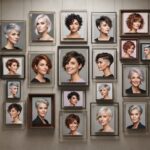
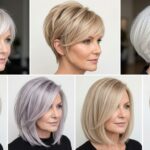
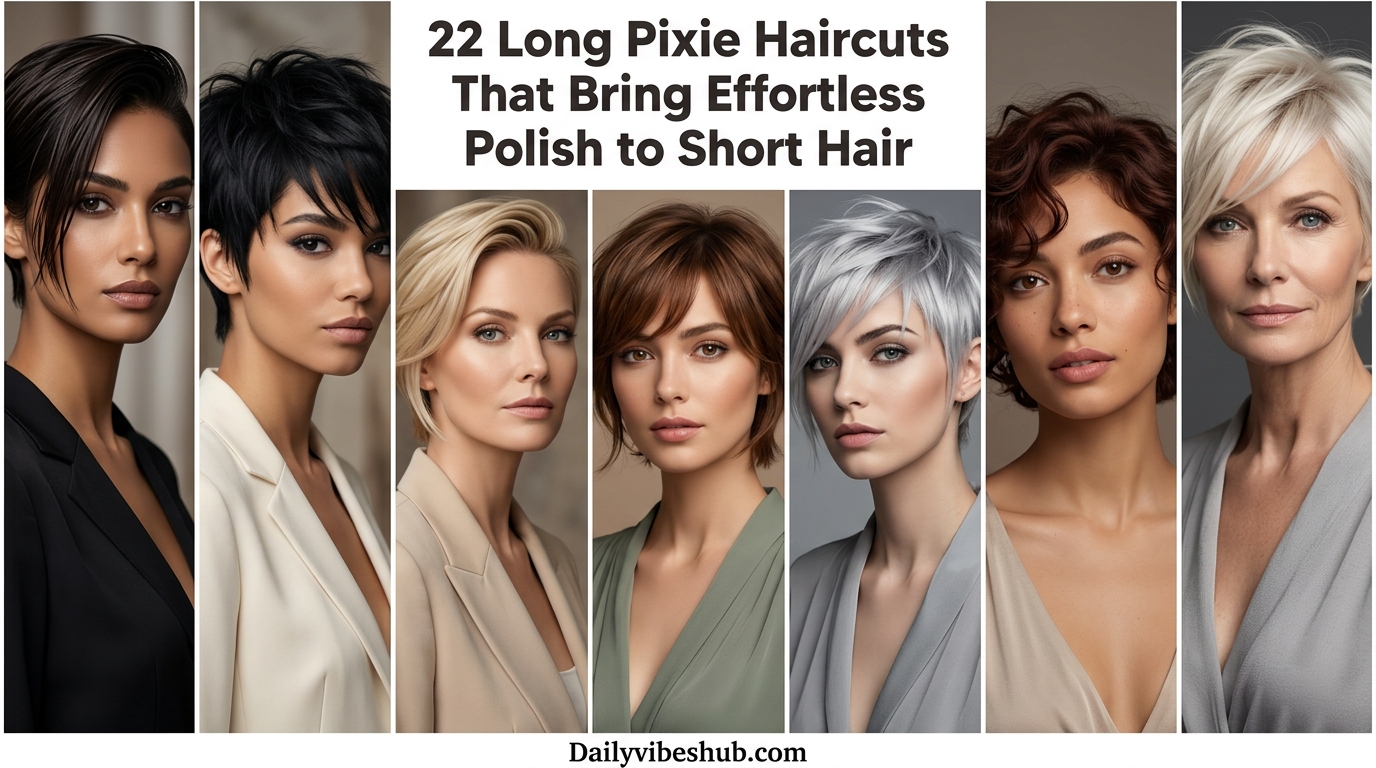
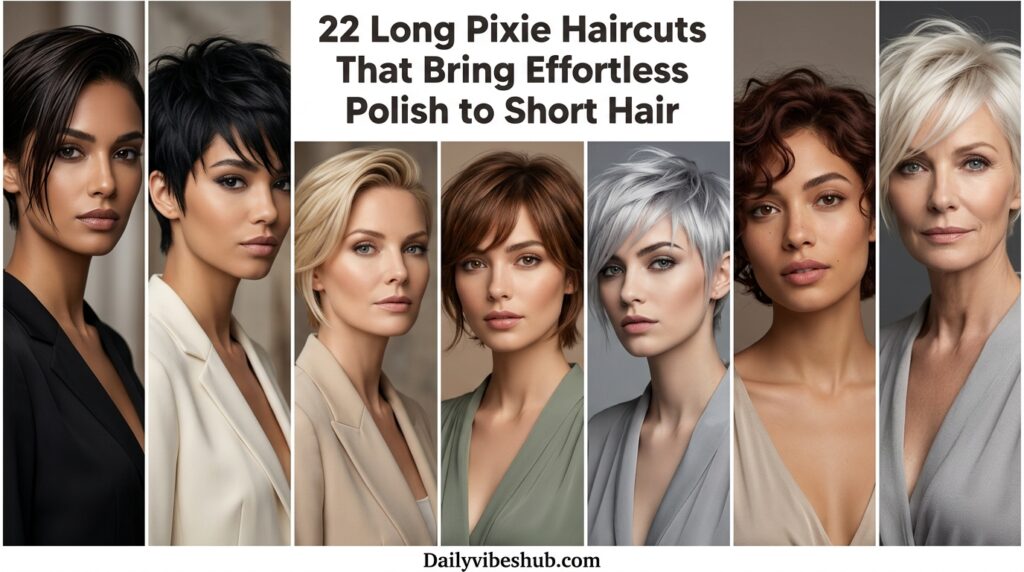
The long pixie sits in a sweet spot most short haircuts can’t reach it has more shape and structure than a classic crop yet none of the daily upkeep that comes with a full bob. It’s a style that adapts easily across different face shapes hair types and ages which is exactly why it never really goes out of rotation on style boards. Below are 22 different takes on the long pixie ranging from soft and romantic to bold and architectural so you can find a version that actually fits your features and your personality.
Table of Contents
- Classic Long Pixie with Side-Swept Fringe
- Long Pixie with Curtain Bangs
- Tousled Long Pixie
- Long Pixie with Wispy Bangs
- Long Pixie with Undercut
- Long Layered Pixie
- Long Pixie with Pompadour Styling
- Long Pixie with Asymmetrical Fringe
- Long Pixie with Bottleneck Bangs
- Long Pixie with Choppy Layers
- Long Pixie with Money-Piece Highlights
- Long Pixie with Swept-Back Top
- Long Pixie with Soft Waves
- Long Pixie with Side Part
- Long Pixie with Mullet-Inspired Back
- Long Pixie with Baby Bangs
- Long Pixie with Feathered Layers
- Long Pixie with Tapered Nape
- Long Pixie with Curtain Layers
- Long Pixie with Razor-Cut Edges
- Long Pixie with Slicked-Back Styling
- Long Pixie with Soft Side-Swept Bangs
1. Classic Long Pixie with Side-Swept Fringe
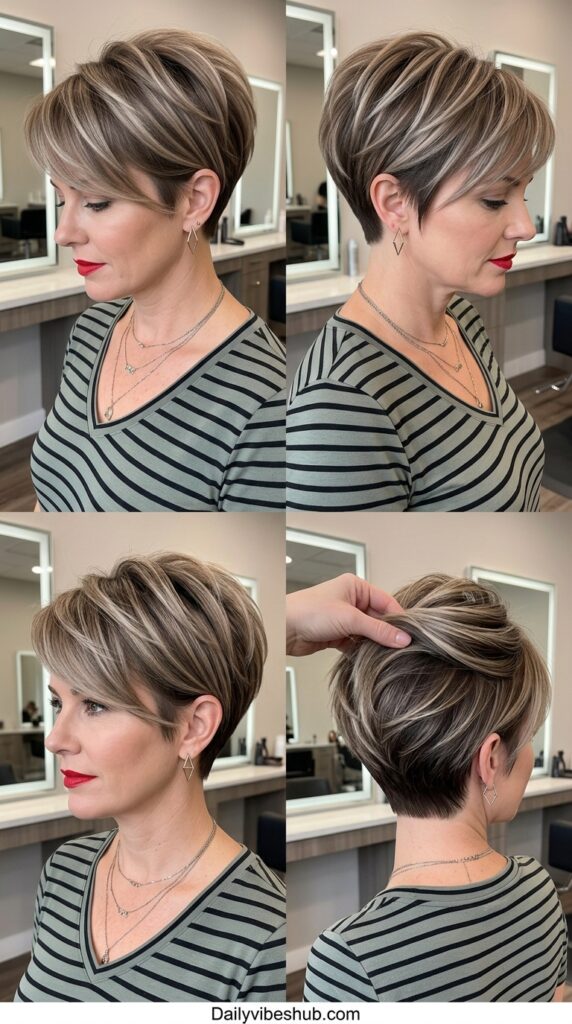
Extra length is kept through the crown and top while a side swept fringe drapes gently across the forehead. This fringe placement softens the whole face and adds a bit of visual interest without overwhelming the cut. To style use a small round brush and sweep the fringe to the side as you blow dry then finish with a pea sized amount of styling cream so the crown doesn’t get weighed down. Because the proportions are so balanced this shape flatters nearly every face shape. Book a trim roughly every five weeks to keep the lines crisp.
2. Long Pixie with Curtain Bangs

Curtain bangs split at the center and sweep outward on both sides blending right into the longer top layers for one continuous shape. A one-inch round brush works best here dry the bangs outward and slightly back for that classic curtain fall. This version pairs especially well with hair that already has some natural body or wave. A light texture spray adds just enough grip to hold the shape and the great part is that curtain bangs grow out gracefully instead of looking awkward between salon visits.
3. Tousled Long Pixie
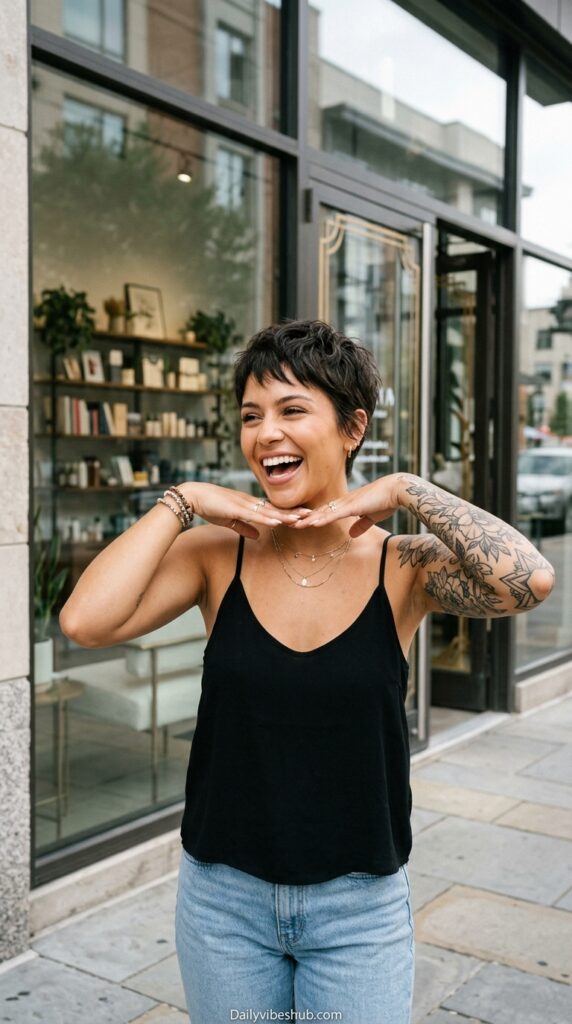
This version is all about piecey undone layers scattered through the top that create constant movement. It has that “didn’t try too hard” appeal that actually takes a little effort to fake. Work a small amount of texture paste through dry strands with your fingers then lock everything in with a flexible hold spray. Naturally wavy or coarser hair textures take to this cut especially well and four week trims keep the tousled shape from getting shaggy.
4. Long Pixie with Wispy Bangs
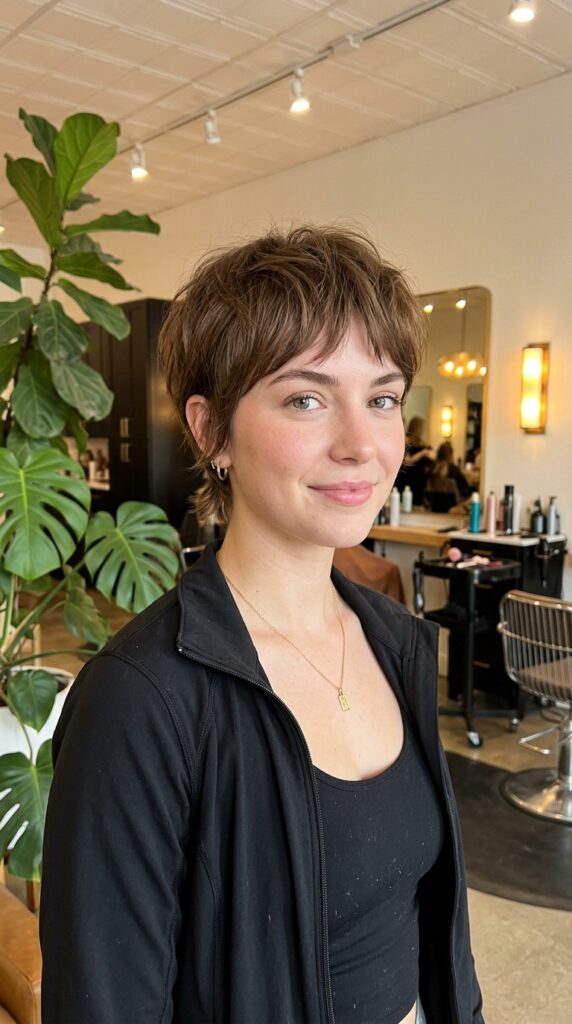
Thinned wispy bangs bring a lighter airier alternative to a full blunt fringe and they pair nicely with longer layers on top. Style them with a small round brush drying them downward with a slight outward flick. Fine hair textures suit this fringe particularly well since the wisps sit naturally without much product. A dry texturizing spray keeps them refreshed between wash days and trims every three weeks stop them from growing past their ideal length.
5. Long Pixie with Undercut
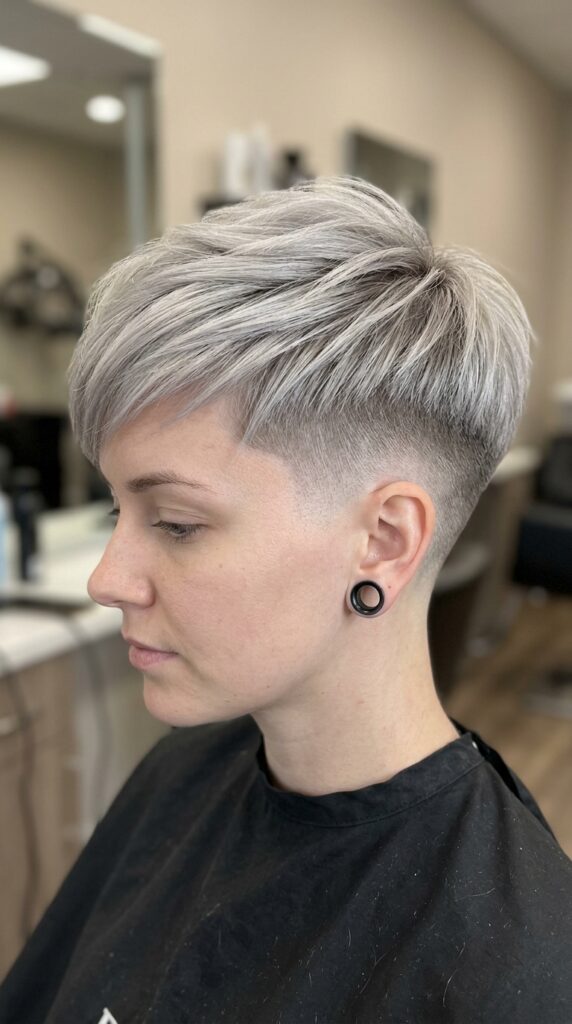
Here the sides and back are shaved close while the top stays long enough to style forward creating a bold contrast between cropped and flowing sections. You can wear the top sleek and forward swept to one side or pushed up for more edge. This shape works best on hair with natural body or a thicker density. A matte clay finishes the style without adding shine, and the undercut needs a refresh roughly every three weeks to stay sharp.
6. Long Layered Pixie
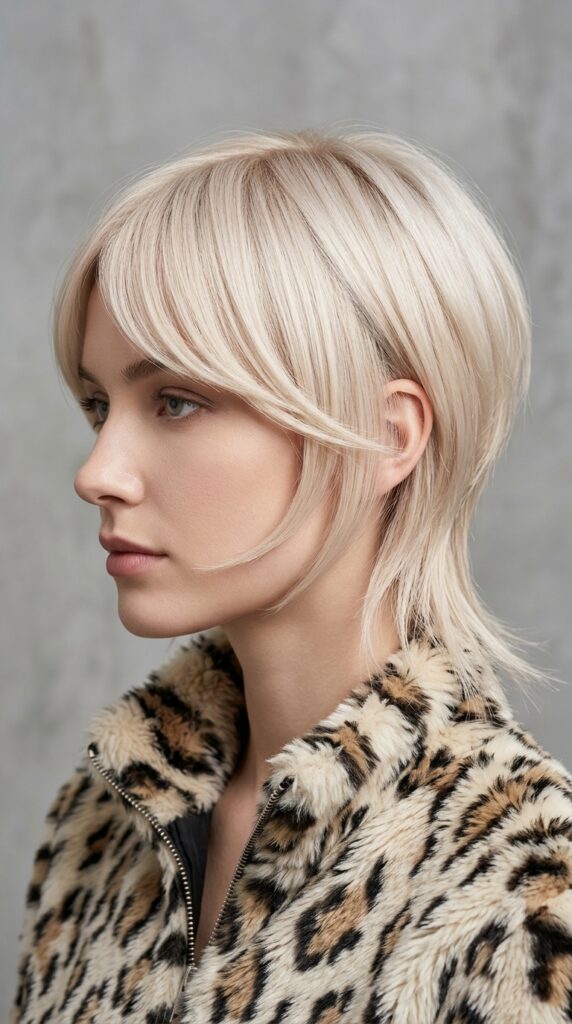
Layered throughout the top this version is built for lift and visible movement. Apply volumizing mousse at the roots before blow drying to maximize the effect then finish with texture spray for piecey definition. Both fine and medium-density hair work well with this layering approach. Trim every four weeks to keep the proportions and movement balanced.
7. Long Pixie with Pompadour Styling
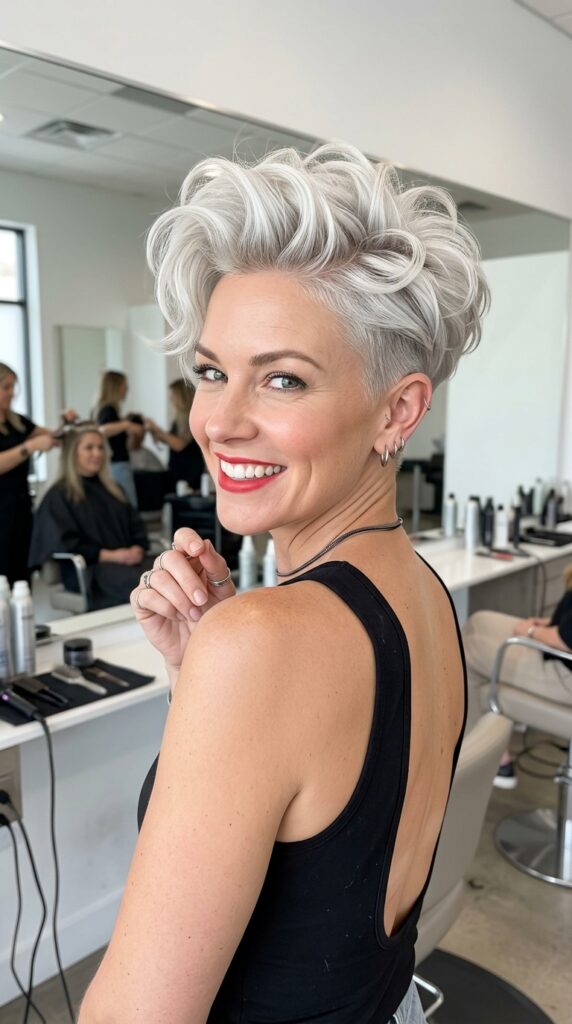
Top length gets pushed upward and back into a pompadour style shape creating dramatic height while the sides stay cropped tight. A strong hold pomade or paste worked through damp hair combined with a concentrated airflow blow dryer is what sets the lift. This style suits thicker or naturally wavy hair especially well and needs a trim every four to five weeks to hold its proportions.
8. Long Pixie with Asymmetrical Fringe
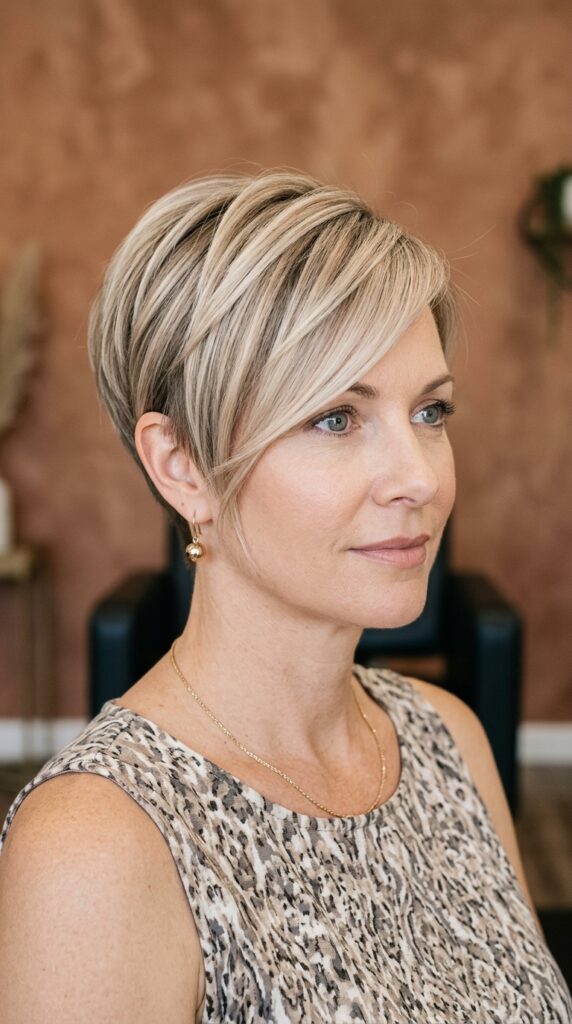
One side of the fringe runs noticeably longer than the other creating a geometric angled look that pulls focus toward the eyes. Use a paddle brush to sweep the longer side across the forehead. This cut looks especially sharp on angular faces or strong jawlines and cool toned blondes or silvers make the architectural lines pop even more. Six-week trims keep the asymmetry from growing out unevenly.
9. Long Pixie with Bottleneck Bangs
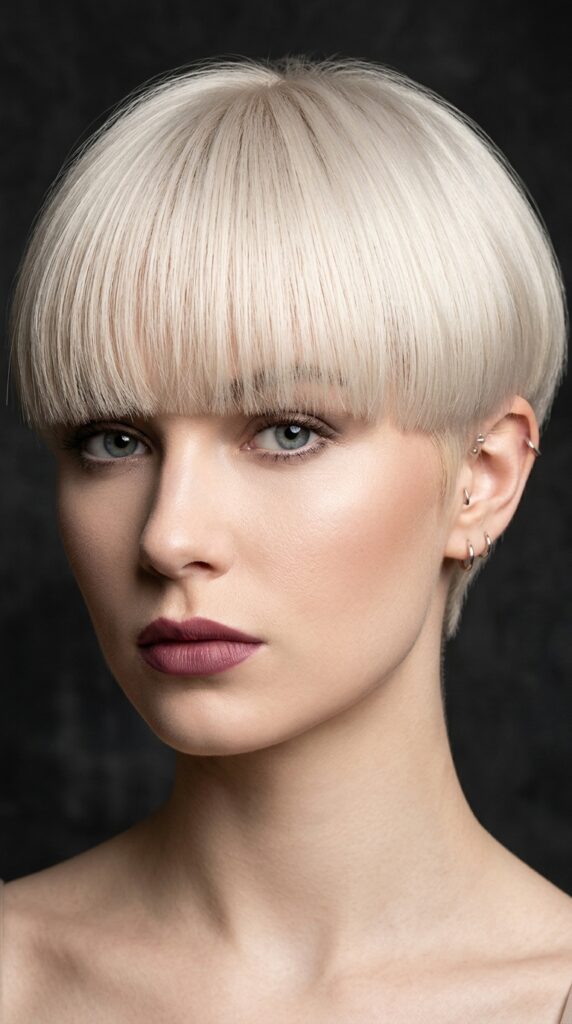
Bottleneck bangs taper from longer pieces on the outside to shorter strands in the center forming a soft curve rather than a hard line. Style with a small round brush following the natural curve as you dry. This shape flatters oval heart and oblong faces particularly well. A lightweight smoothing cream keeps the curve defined between washes with trims recommended every four weeks.
10. Long Pixie with Choppy Layers
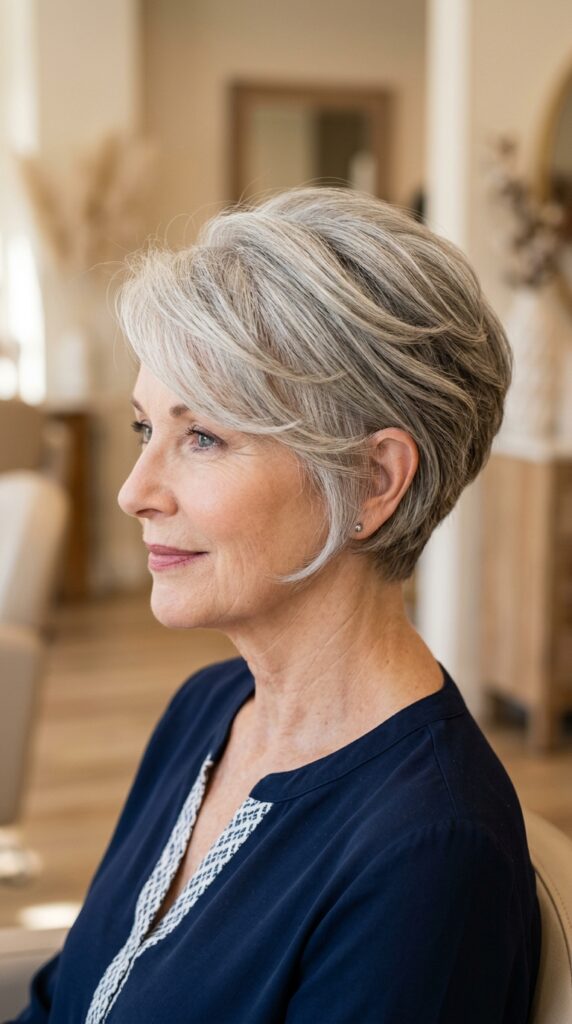
Deliberately uneven choppy layers throughout the top give this version a rock inspired edge and extra texture that smoother cuts can’t replicate. Work texture clay through damp hair before drying then set with a flexible hold spray so it holds without feeling stiff. Wavy or coarser textures suit this style especially well and five week trims keep the choppiness intentional rather than unruly.
11. Long Pixie with Money-Piece Highlights
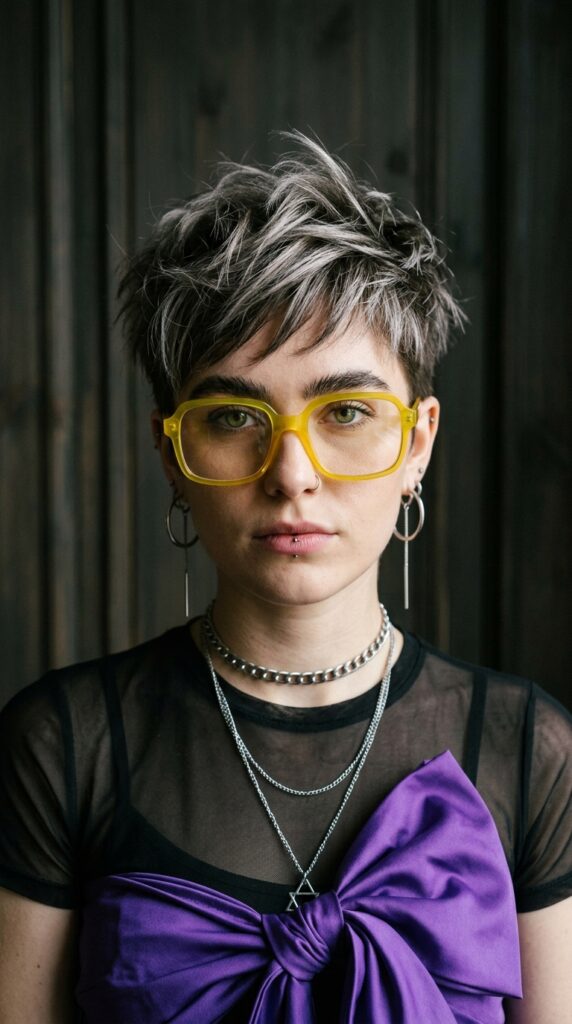
Rather than relying on cut alone this version uses brighter face framing highlights to build dimension. Because a long pixie keeps hair close to the face money pieces show up more directly than they would on longer hair. Refresh the color every twelve to fourteen weeks and use a heat protecting cream before styling to keep the color from fading too quickly. This technique translates well across blonde brunette and silver base colors.
12. Long Pixie with Swept-Back Top
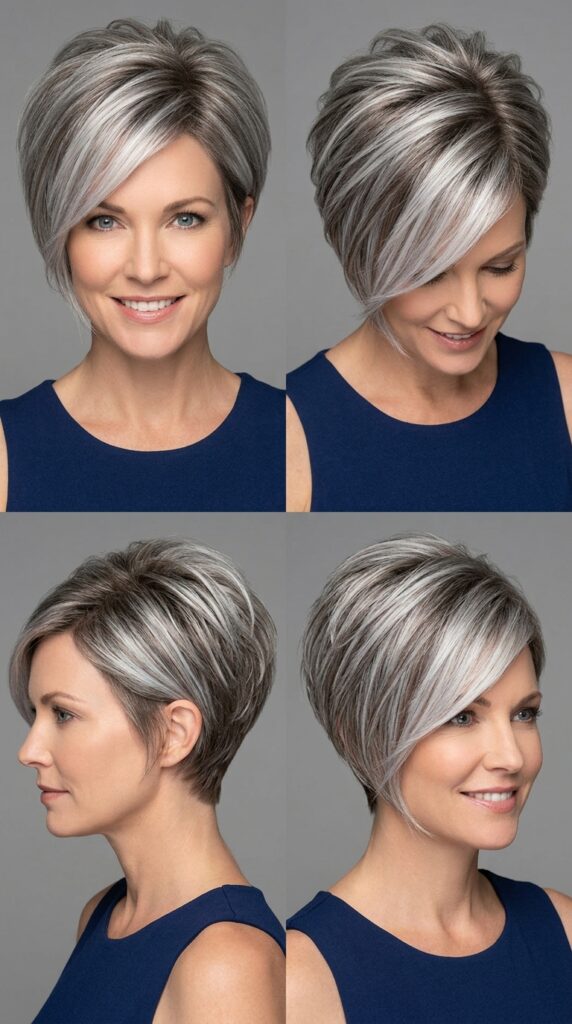
The top is styled entirely away from the forehead for an open confident look that puts facial features front and center. Work styling cream or pomade through damp hair before blow drying it back then set with a medium-hold spray. This works best on thicker or naturally full hair and needs a trim every four weeks to maintain its shape.
13. Long Pixie with Soft Waves
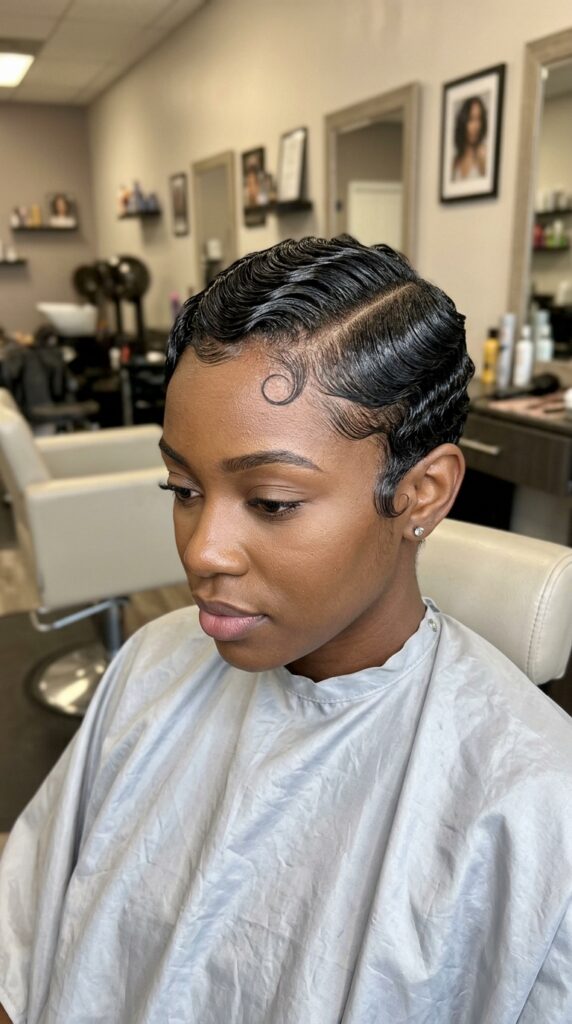
Soft waves through the top layers add a feminine romantic touch to the cropped shape. A half-inch curling iron used on small sections curled in alternating directions creates the pattern and a lightweight curl cream applied to damp hair helps it hold. Naturally wavy or curly hair takes to this style easily and you can revive the waves the next day with a light water mist and a touch more curl cream.
14. Long Pixie with Side Part
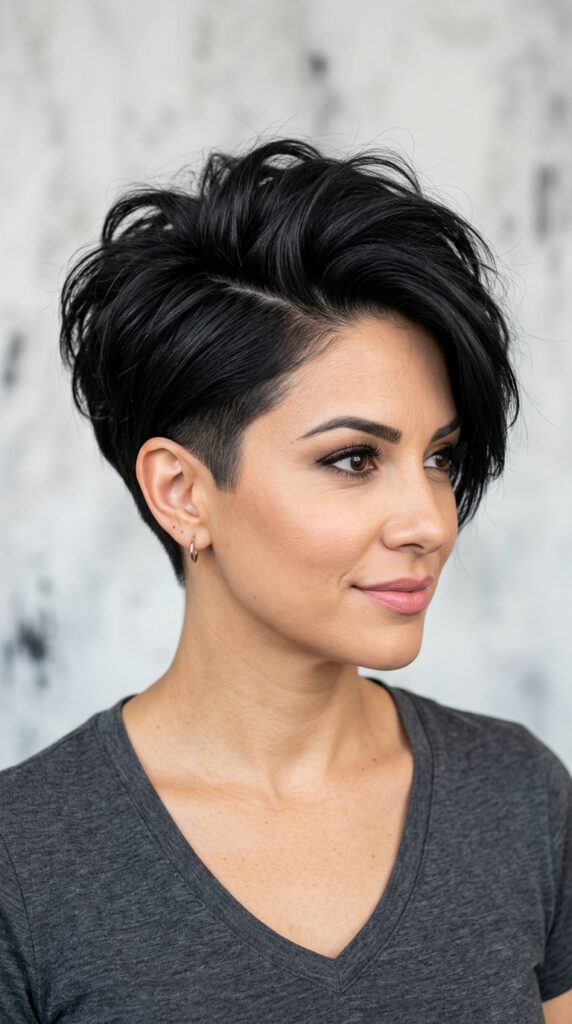
A deep side part creates asymmetry and pushes volume up and over to one side instantly building height at the crown. Train the part with styling cream and a paddle brush while drying. This flatters most face shapes by adding angular contrast and it looks great in blonde brunette or silver tones alike. Trim every five weeks to keep the structure balanced.
15. Long Pixie with Mullet-Inspired Back
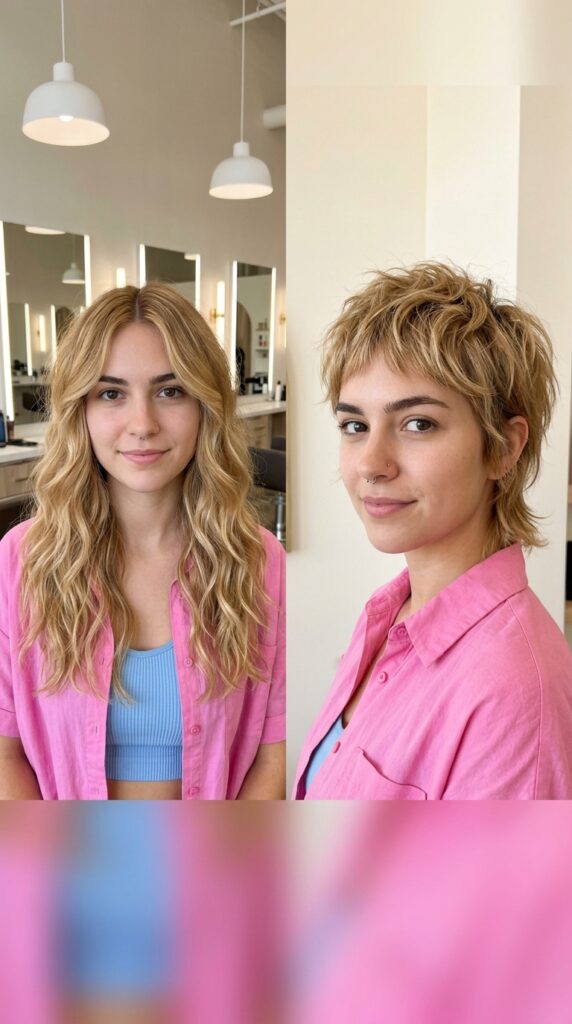
Length is kept longer at the nape for a subtle mullet inspired finish enough personality without going full mullet. The top can be styled forward or to the side depending on your mood. Hair with natural body or wave supports the longer back length best and a texture spray ties the top and back together with matching grit. Plan on a trim roughly every five weeks.
16. Long Pixie with Baby Bangs
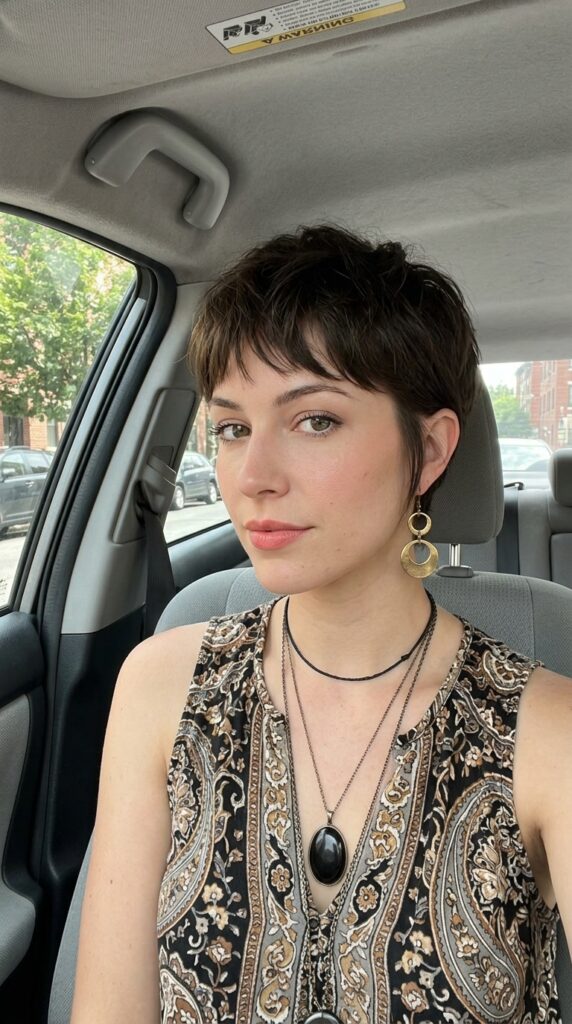
Short blunt baby bangs sit high on the forehead for a bold graphic contrast against the longer top sections. This look leans confident and makes a statement so it suits faces with strong features that can carry the drama. Style the top sleek and forward or tousled for variation and finish bangs with a touch of texture paste. Trim every three weeks to keep the blunt line crisp.
17. Long Pixie with Feathered Layers
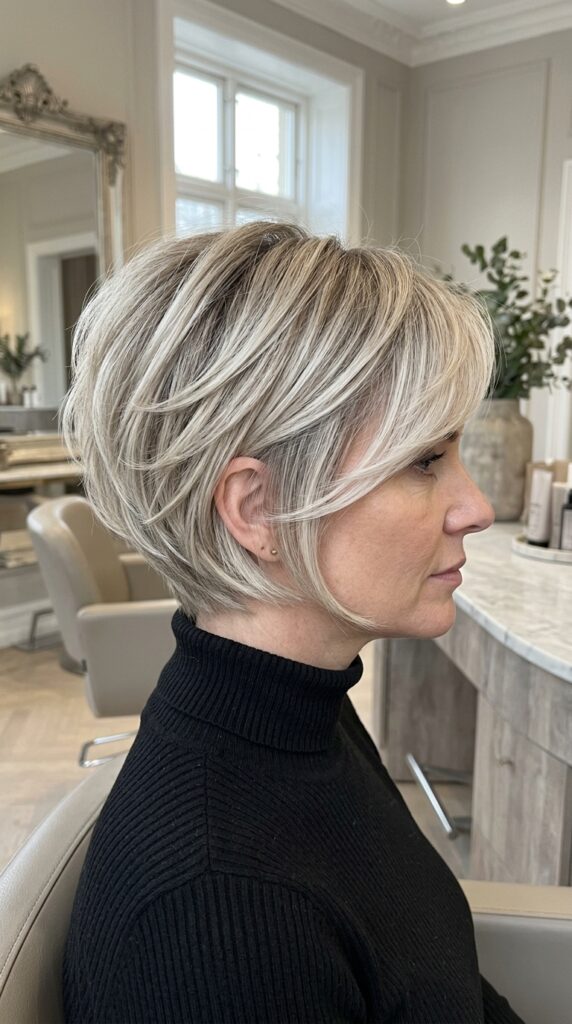
Soft feathered layers throughout the top create airy movement with a nod to 70s-inspired styling. Because the feathering comes from gentle layering rather than razor work hair structure stays intact. A round brush used to feather layers outward while blow drying gets the look finished with a light hairspray. Naturally wavy or full bodied hair suits this best with trims every six weeks.
18. Long Pixie with Tapered Nape
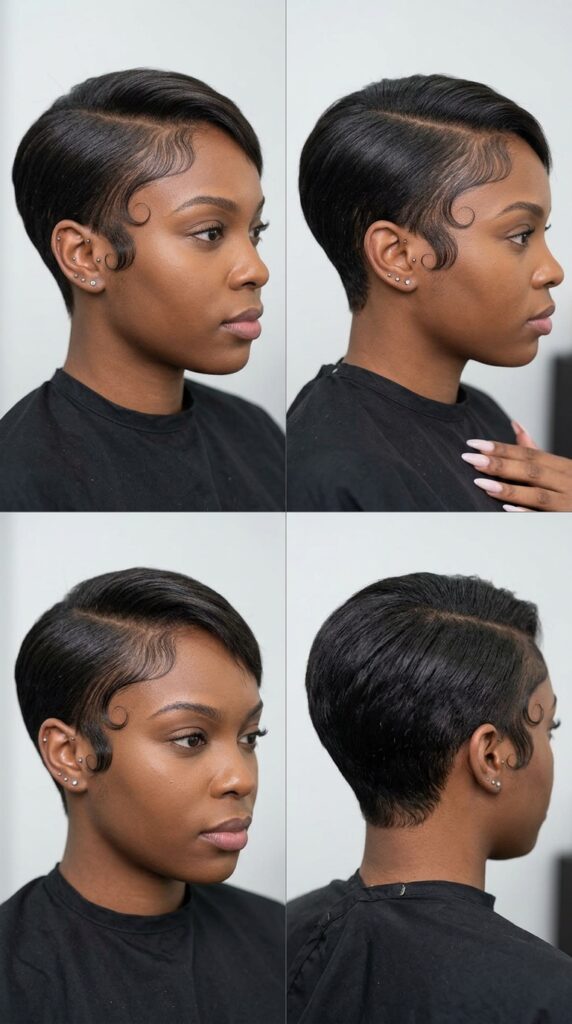
The nape is tapered close while the top stays long enough to style forward giving a clean structured back without going full undercut. Style the top sleek side swept or tousled depending on preference. This shape adapts well across straight through curly textures and a matte paste adds definition. Trim every four weeks to maintain the tapered shape.
19. Long Pixie with Curtain Layers
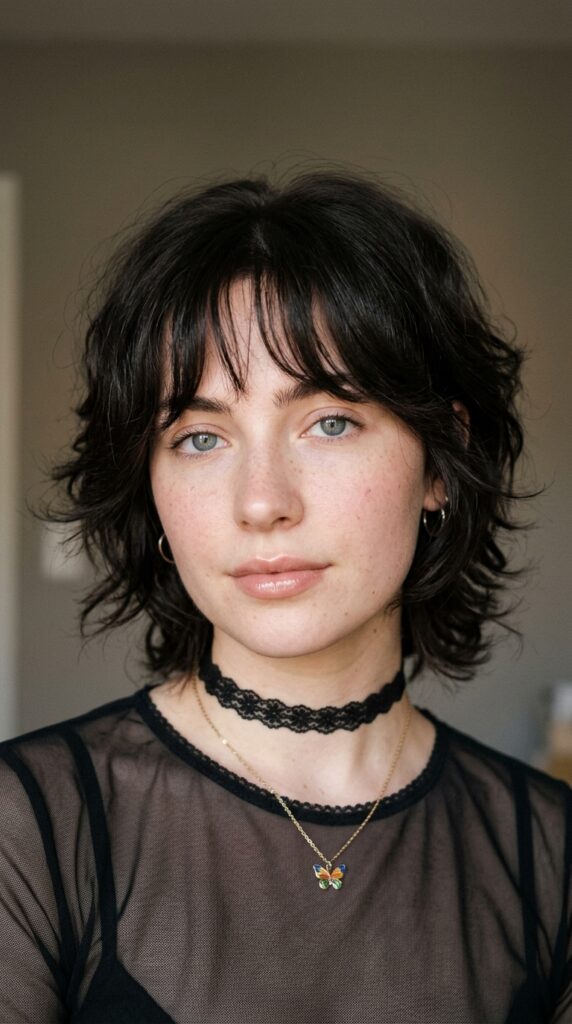
Layers fall outward from a center part creating a soft curtain effect through the top that feels romantic while keeping the back cropped short. A one and a quarter inch round brush, used to dry layers outward from the center achieves the shape. Naturally full or slightly wavy hair works especially well here. A lightweight smoothing cream keeps things polished with trims every five weeks.
20. Long Pixie with Razor-Cut Edges
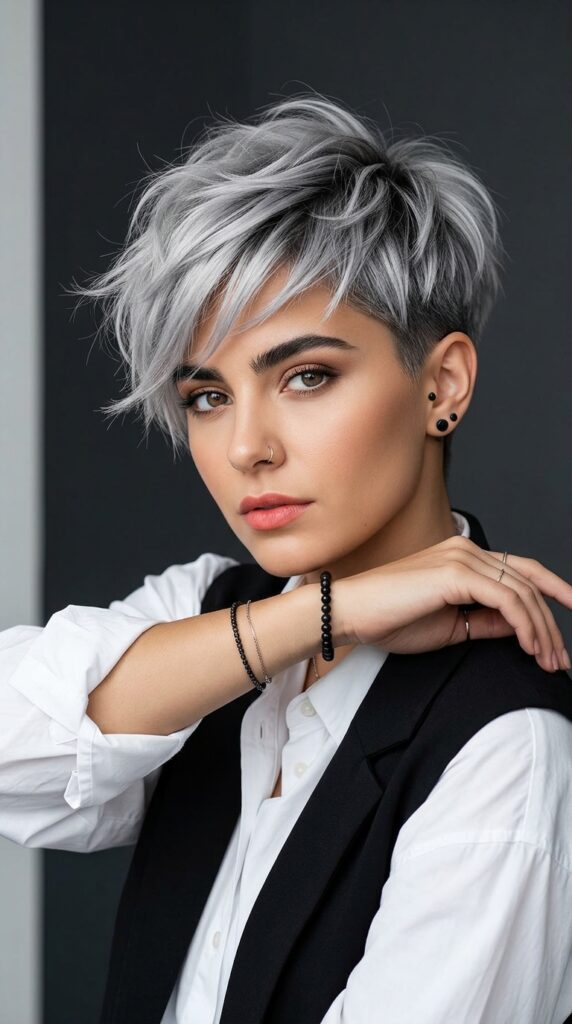
Razor cutting softens the perimeter for a feathered lived in finish that scissors alone can’t replicate. Apply curl cream and let hair air dry for the most natural undone result. Fine or naturally wavy hair suits razor cutting particularly well coarser hair can end up looking frayed so it’s worth discussing with your stylist first. Trim every five weeks to maintain the softened edges.
21. Long Pixie with Slicked-Back Styling
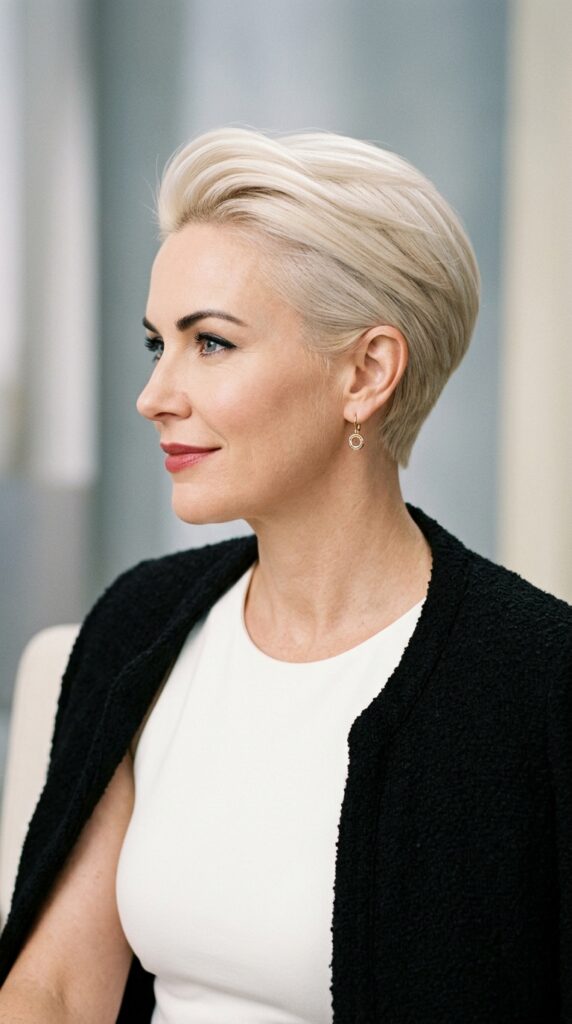
For a sleek editorial finish, the top is styled fully backward to highlight facial structure. A strong hold gel or pomade worked through damp hair before drying achieves the polish set with a medium hold spray. This look works beautifully for evening events or a more polished daytime finish. Trim every four weeks to keep the styling proportions intact.
22. Long Pixie with Soft Side-Swept Bangs
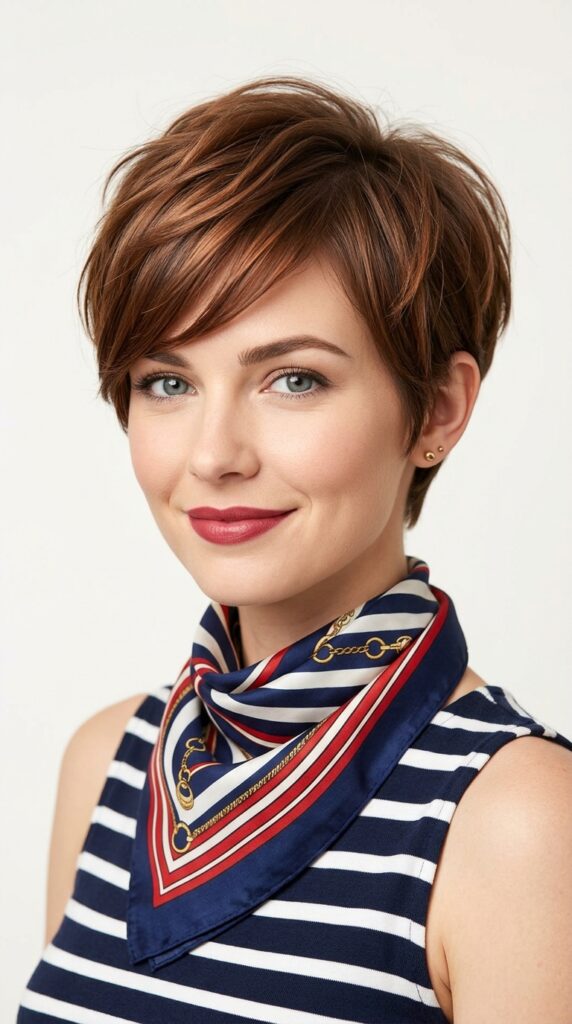
Gentle blended side swept bangs sweep softly across the forehead merging smoothly into face-framing pieces without any harsh lines. A paddle brush used while drying helps sweep the bangs into place. This softer take suits most face shapes thanks to its balanced proportions and a lightweight cream finishes it without weighing hair down. Trim every four to five weeks to keep the blend soft.
Frequently Asked Questions
What is a long pixie haircut?
A long pixie is a short haircut that keeps more length through the top and crown than a classic pixie while the sides and back stay cropped closer. It offers more styling versatility than a traditional pixie without the daily upkeep of a bob.
How often do long pixie cuts need to be trimmed?
Most versions need a trim every three to six weeks depending on the specific style sharper blunt shapes like baby bangs need more frequent trims while softer layered versions can stretch closer to six weeks.
Does a long pixie suit fine hair?
Yes. Many long pixie variations especially layered or wispy bang versions are specifically flattering on fine hair since the shorter length and strategic layering create the appearance of extra volume and density.
Can curly or wavy hair wear a long pixie?
Absolutely. Textured hair often adds natural movement to long pixie shapes particularly tousled feathered or wavy variations without requiring much extra styling effort.
What’s the difference between an undercut pixie and a tapered pixie?
An undercut uses shaved or very closely cropped sides and back for a dramatic contrast against the longer top. A tapered nape is more gradual and subtle creating a cleaner back without the sharp shaved in line of an undercut.
How do I choose the right long pixie style for my face shape?
Softer layered or side swept styles tend to flatter rounder faces while asymmetrical or blunt fringe options add definition to softer features. A stylist can help adjust proportions of nearly any version to suit your specific face shape.