
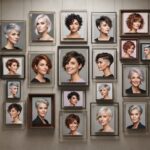
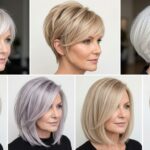

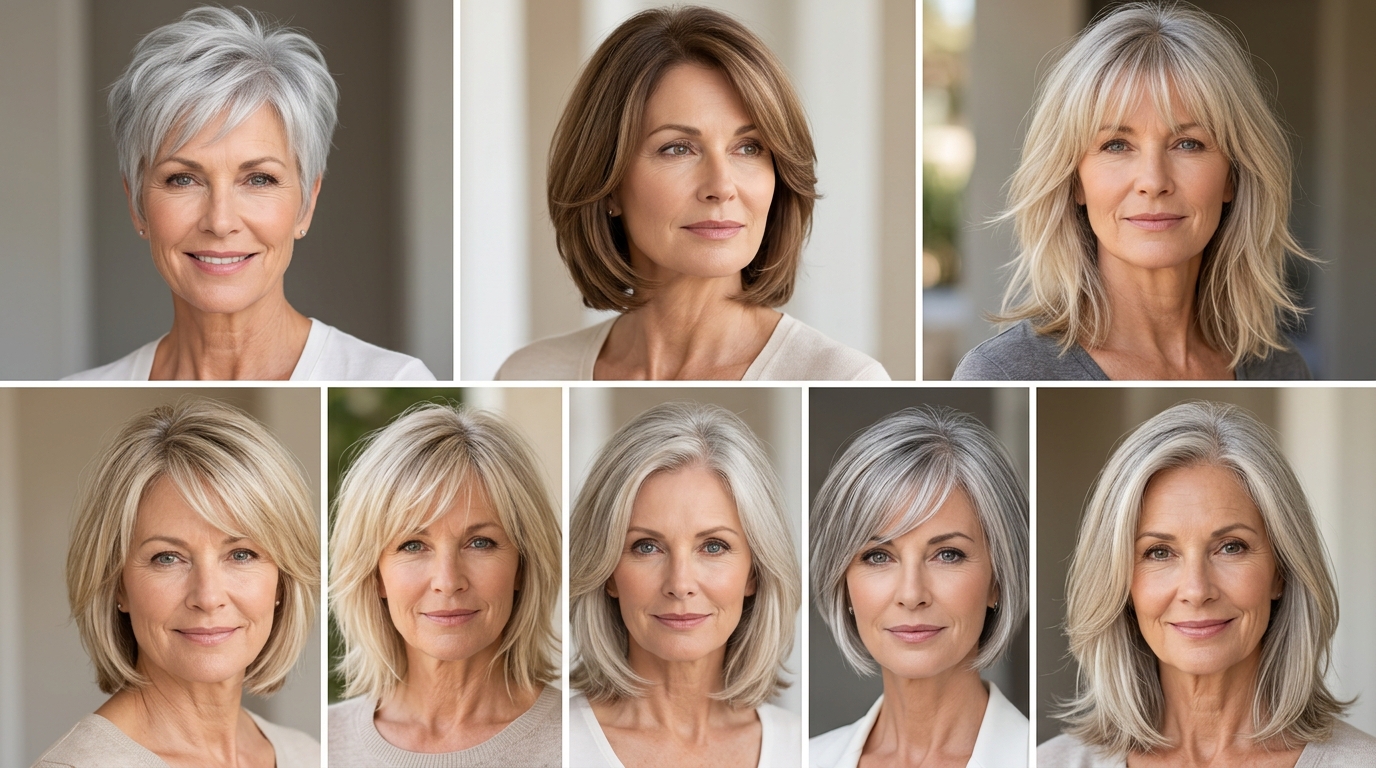
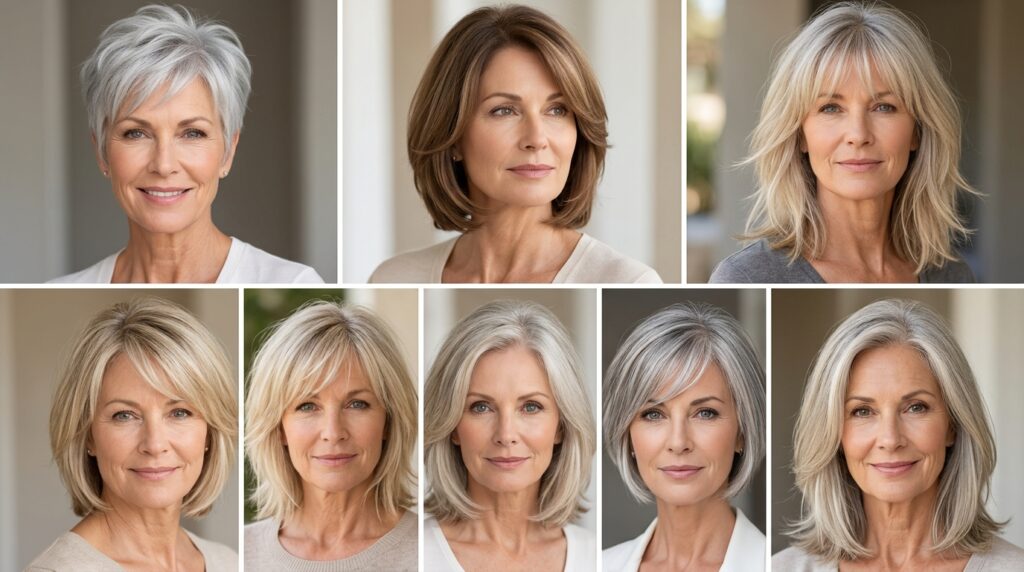
Thin hair doesn’t have to mean limited style options especially with the right cut behind it. The best haircuts for thinning hair work with the hair you have rather than trying to force volume that isn’t naturally there through smart layering, strategic length and structure placed exactly where it’s needed most. Below are 22 flattering haircuts designed specifically to add visible fullness lift and movement to thin or fine hair on older women.
Table of Contents
- Classic Blunt One-Length Cut
- Soft Crop with Side Bangs
- Stacked Bob with Crown Volume
- French Bob with Soft Bangs
- Long Pixie with Layered Top
- Soft Layered Bob with Bangs
- Textured Pixie with Volume
- Inverted Bob with Stacked Back
- Wispy Bixie
- Razor-Cut Pixie with Soft Edges
- Asymmetrical Pixie
- Polished Lob with Side Part
- Tapered Crop with Top Volume
- Soft Lob with Curtain Bangs
- Pixie with Pompadour Lift
- Chin-Length Bob with Face-Framing Layers
- Long Bob with Money-Piece Highlights
- Crop with Soft Fringe
- Layered Pixie with Side Sweep
- Wavy Bob with Soft Wave Texture
- Modern Crop with Tapered Sides
- Soft Bob with Subtle Layers
1. Classic Blunt One-Length Cut
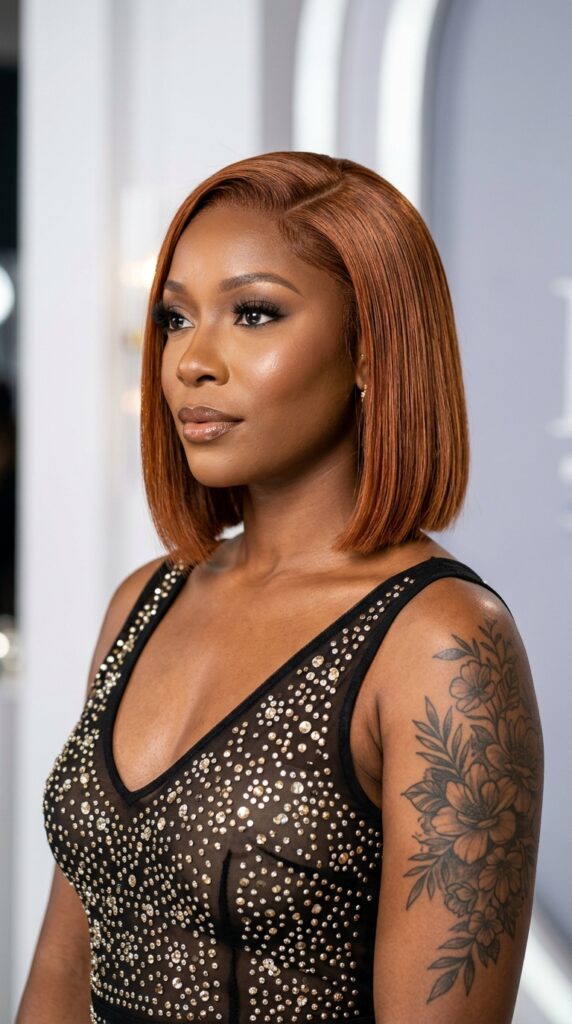
Keeping every strand at a uniform length is one of the simplest ways to maximize visible thickness since no internal layering strips away any density thin hair already has to work with. Style with a smoothing cream and a paddle brush while blow drying choosing either a deep side part or a center part depending on preference. Regular trims every five weeks keep the perimeter line looking sharp and intentional rather than uneven or worn down over time.
2. Soft Crop with Side Bangs
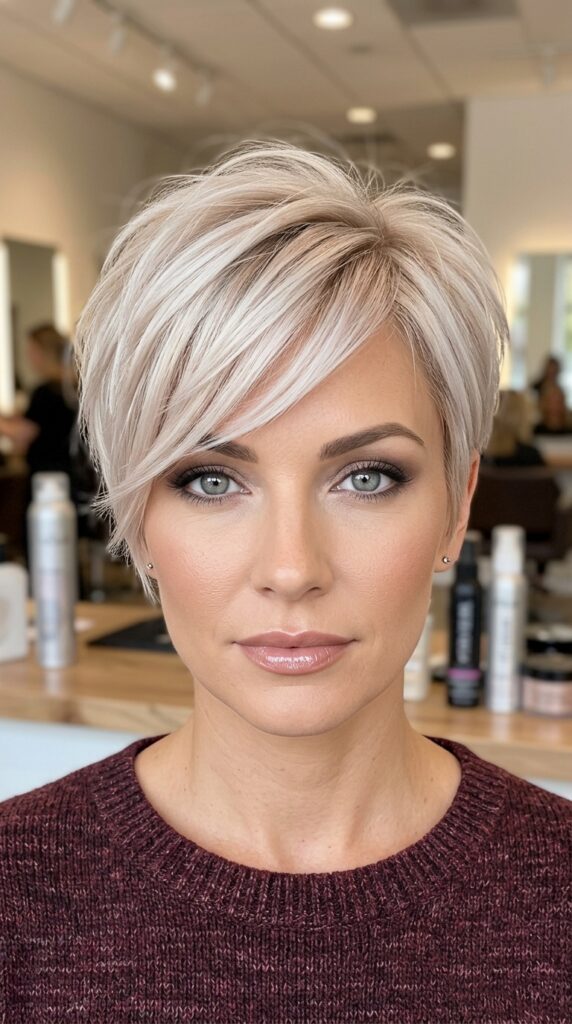
Longer side bangs swept across the forehead help camouflage thinning along the hairline while keeping the crown slightly longer adds noticeable lift through the top of the style. A small amount of texture paste worked into dry hair along with a volumizing dry shampoo between wash days keeps this shape looking fresh. Trims scheduled every four weeks help maintain the crop’s overall structure and prevent it from growing out unevenly.
3. Stacked Bob with Crown Volume
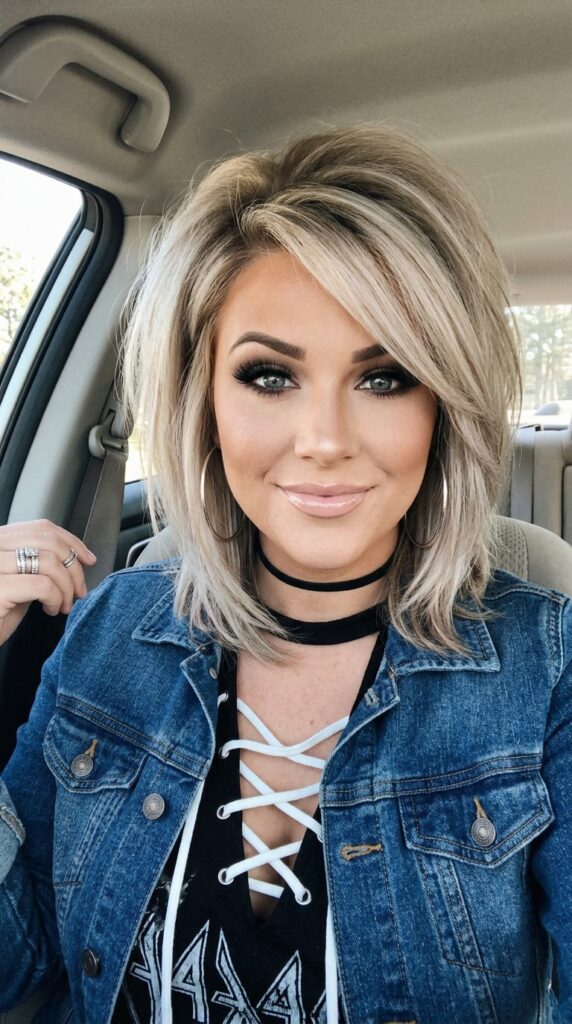
Graduated layers stacked toward the back build real structure exactly where fine hair tends to fall flattest throughout the day. Styling with a round brush enhances this built-in volume nicely and side swept bangs complete the shape well just avoid heavy products which can weigh the structure down and undo the lift. Plan on trims roughly every five weeks to keep the stacking clean and defined.
4. French Bob with Soft Bangs

Landing just below the ear and paired with soft blunt bangs above the brows this shape maximizes perimeter weight while also framing the eyes and drawing attention away from thinning at the temples. A lightweight smoothing cream keeps everything looking clean and the cut grows out gracefully into a longer bob shape which stretches out the time between salon visits. It suits straight wavy and lightly curly textures equally well.
5. Long Pixie with Layered Top
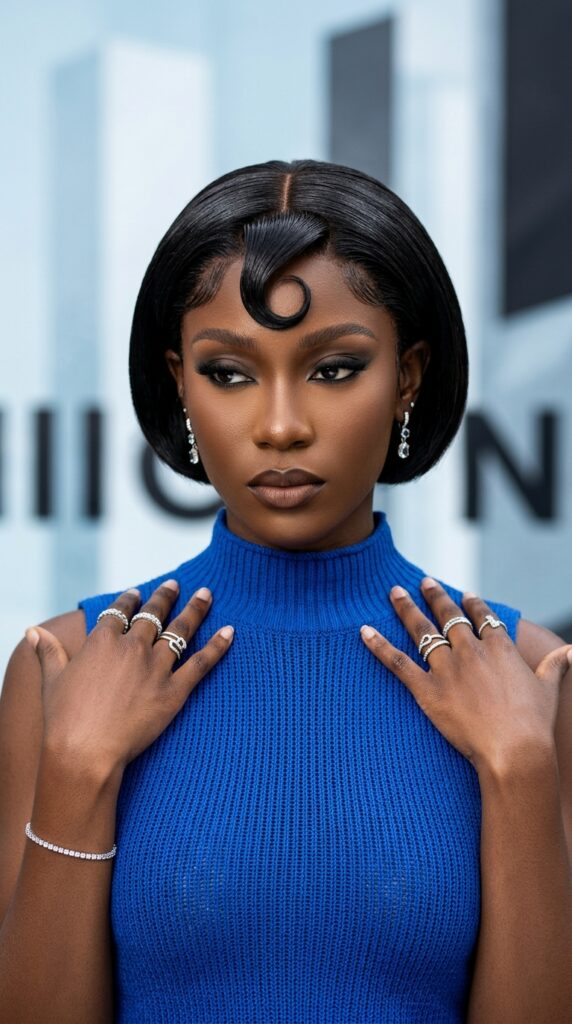
Multiple layers worked through the top create visible lift and natural movement while the back stays cropped short and structured. This version works especially well on thicker or naturally full hair applying styling cream to damp hair along with a volumizing mousse at the roots helps maximize the overall effect. Trims scheduled every four to five weeks keep the layered shape looking intentional and well maintained.
6. Soft Layered Bob with Bangs
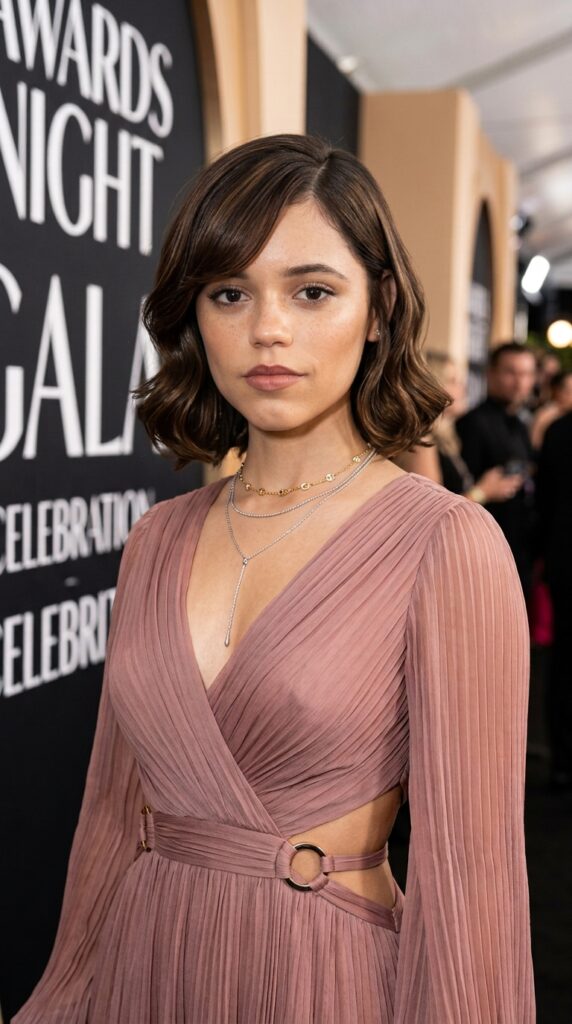
Face framing layers paired with wispy bangs add gentle dimension while keeping the layering limited mostly to the face which helps preserve density everywhere else. Using a 1.25-inch curling iron and alternating direction section by section creates natural bend throughout and a flexible hold hairspray locks the finished shape in place. Trims every six weeks are usually enough to keep this softer style looking maintained.
7. Textured Pixie with Volume
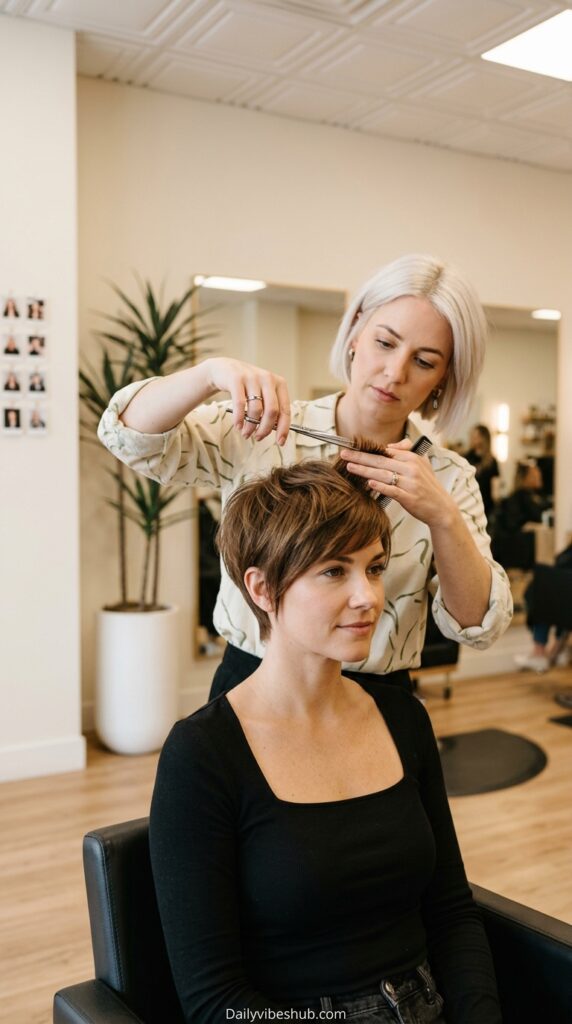
Deliberately piecey styling through the top adds lift and visual movement that helps distract from any visible scalp underneath. A matte clay worked through with fingers delivers fast ready to go results with minimal effort involved. This particular cut has become a favorite among women transitioning to natural gray since the shorter length and texture show off the color beautifully. Trim roughly every four weeks to maintain it.
8. Inverted Bob with Stacked Back
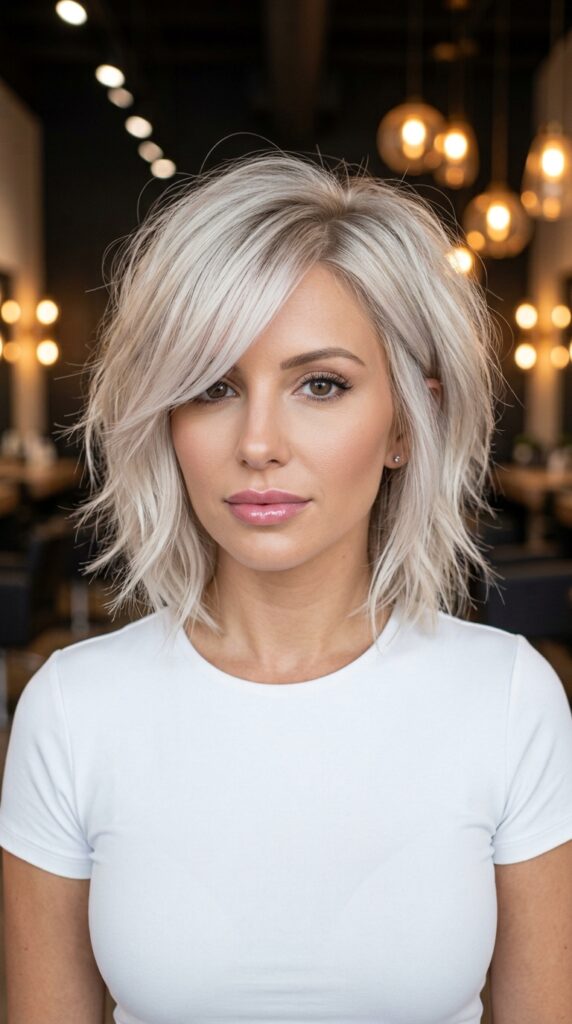
Longer in the front with stacked layers building volume through the back this shape adds crown lift that fine hair often struggles to achieve on its own. Drying with a round brush aimed upward at the back section helps maximize that lift even further cool toned brunette and silver shades look especially fresh paired with this particular cut. Maintenance visits typically fall every four to five weeks.
9. Wispy Bixie

This bob pixie hybrid keeps a chin length base paired with longer wispy pieces in front that add instant fullness around the face. A deep side part helps boost volume at the crown and a small amount of styling cream creates piecey natural looking movement throughout. Trimming every four weeks helps preserve the shape’s structure and keeps the wispy pieces from growing out too quickly.
10. Razor-Cut Pixie with Soft Edges
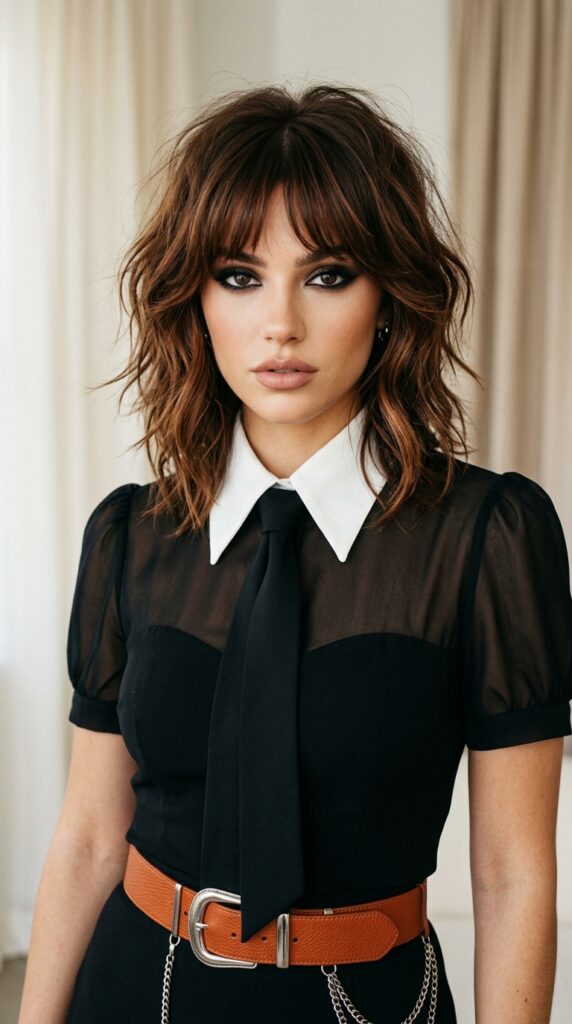
Razor cutting creates a feathered airy texture through the top that scissors alone simply can’t replicate quite as well. This technique tends to suit hair with natural wave or fine texture best very thin hair can sometimes end up looking sparser with heavy razor work so it’s worth discussing the approach with your stylist beforehand. Trim approximately every five weeks to maintain the soft feathered edges.
11. Asymmetrical Pixie
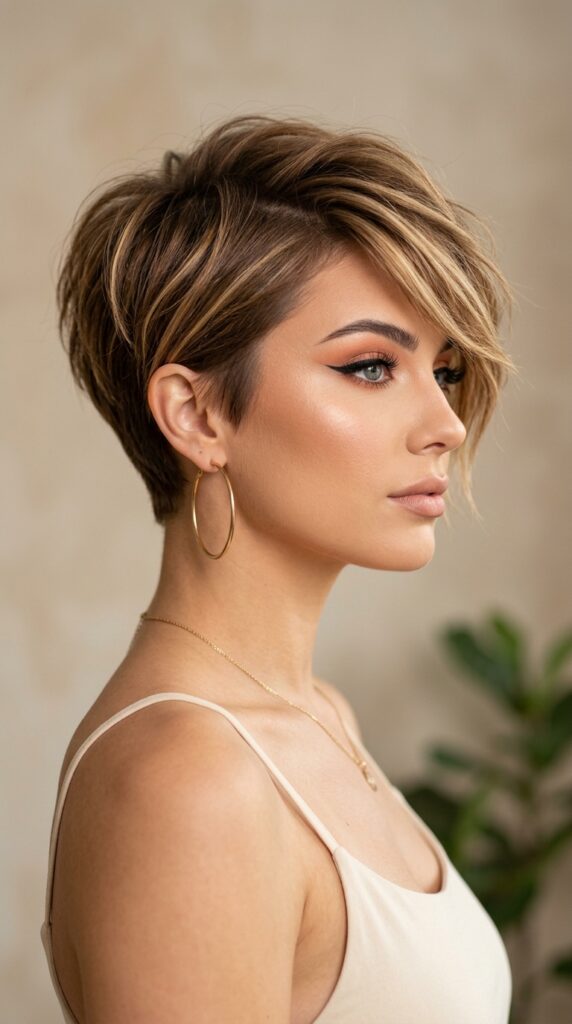
Cutting one side noticeably longer than the other adds geometric interest and naturally draws the eye upward toward the face. Style the longer side swept across the forehead or tucked neatly behind one ear for versatility throughout the day. Cool toned blonde brunette and silver shades all suit this particular shape well. Maintenance trims typically fall every four weeks to keep the asymmetry looking clean.
12. Polished Lob with Side Part
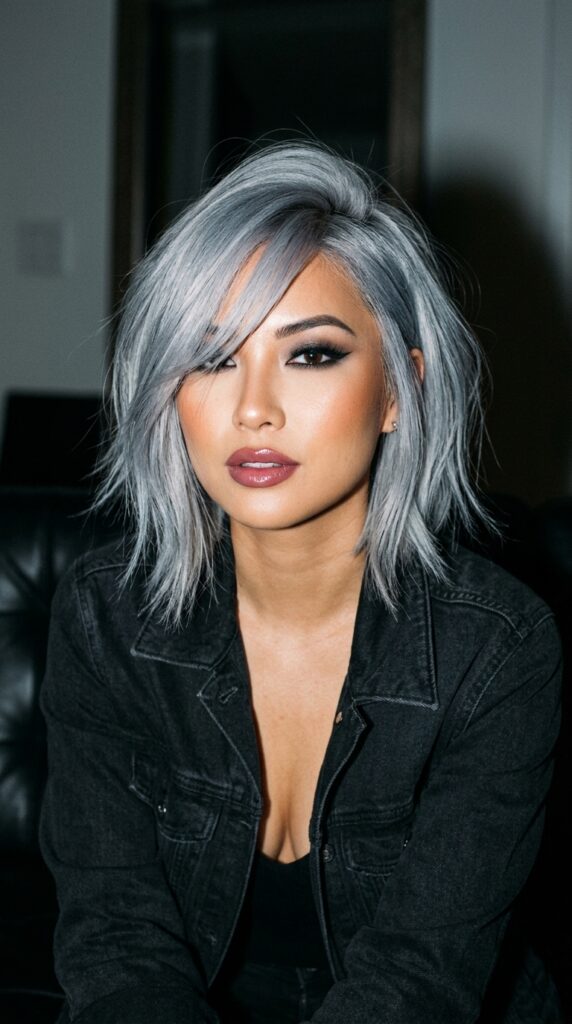
A collarbone length lob paired with a deep side part instantly adds volume by lifting hair up and over toward one side. Blow drying with a paddle brush gives the cleanest most polished finish while a lightweight shine serum adds polish without weighing the style down. Subtle highlights add extra dimension throughout plan for trims roughly every six weeks to keep the shape looking fresh.
13. Tapered Crop with Top Volume
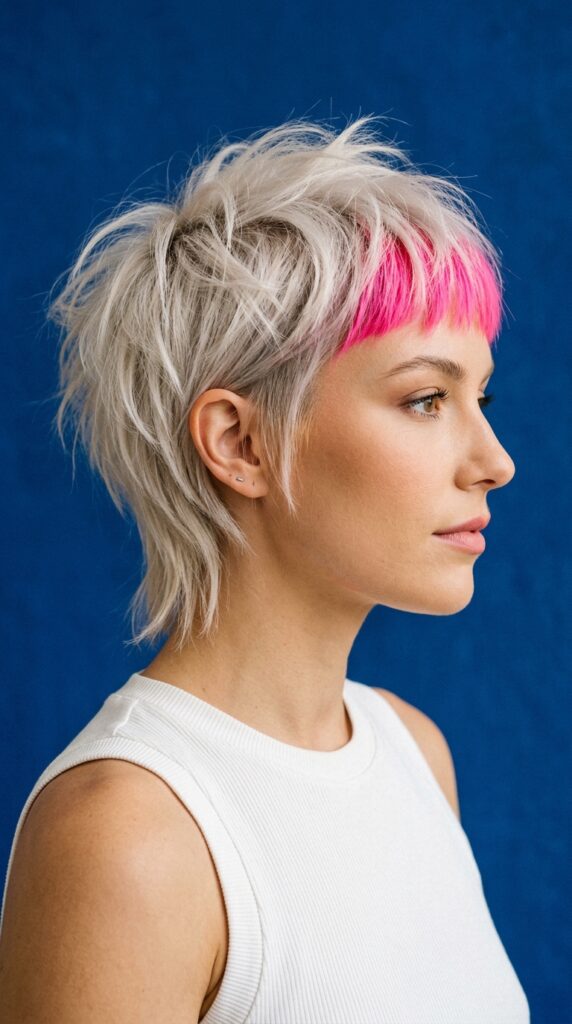
Close cropped sides and back paired with fuller sections on top keep this cut from feeling too severe on more mature features. Applying a volumizing spray at the roots before styling then finishing with a matte paste gives the shape real structure this particular combination is a strong match for women embracing their natural gray. Trim approximately every four weeks to maintain it well.
14. Soft Lob with Curtain Bangs
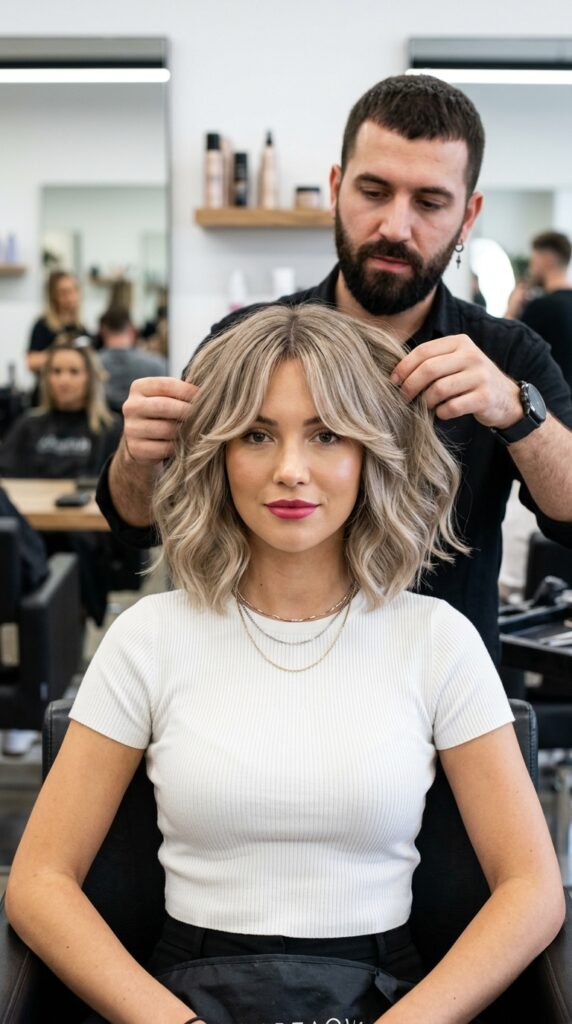
Curtain bangs bring a romantic gentle quality to a collarbone grazing lob helping distract from any crown thinning by drawing focus toward the face instead. Using a 1.5-inch round brush to sweep the bangs outward works particularly well here and wavy hair textures suit this cut especially naturally without much extra effort. Trim roughly every six weeks to keep the shape and bangs looking maintained.
15. Pixie with Pompadour Lift
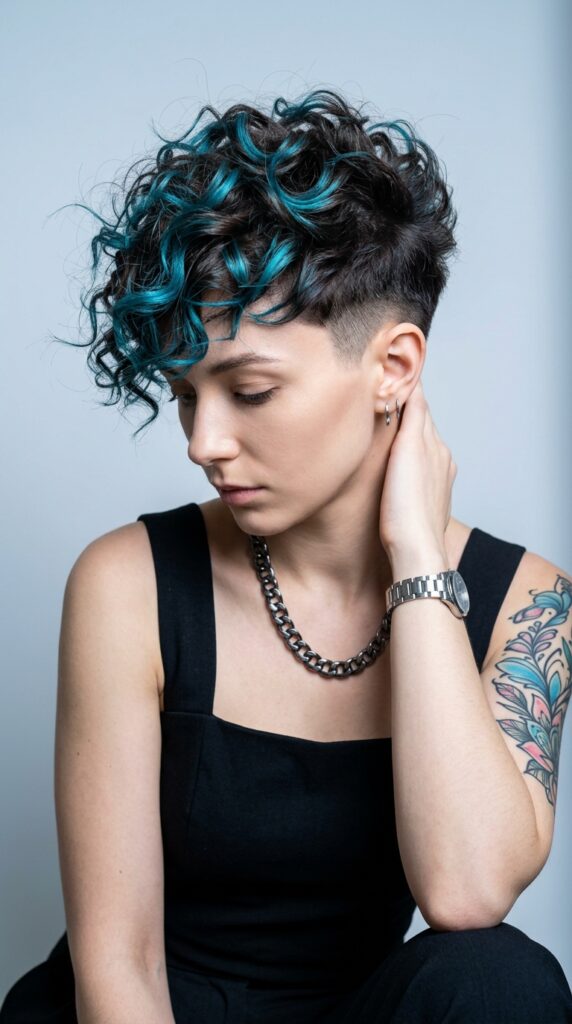
Lifted pompadour-inspired styling through the top creates dramatic height that draws attention toward the face while minimizing the appearance of crown thinning. A strong hold pomade applied to damp hair finished with concentrated airflow from a blow dryer helps set the lifted shape effectively. This style tends to suit thicker or naturally wavy hair best. Maintenance visits typically fall every four to five weeks.
16. Chin-Length Bob with Face-Framing Layers
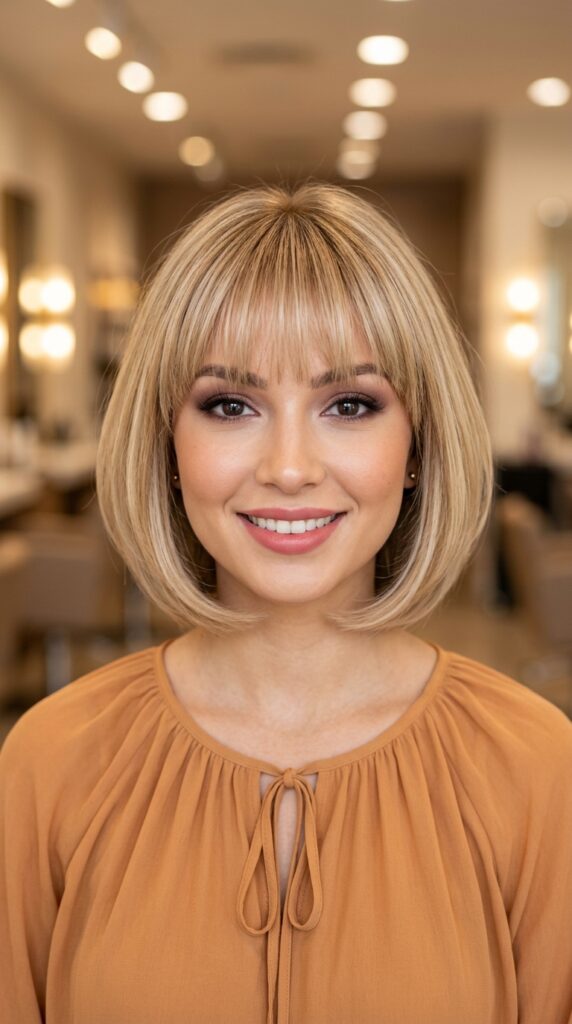
Gentle layers placed around the cheekbones add dimension while keeping most of the remaining length untouched to help preserve overall density. Using a 1.25-inch curling iron and alternating direction throughout creates soft natural looking movement and a lightweight shine serum finishes the look without adding unwanted weight. This cut also grows out fairly gracefully between salon visits, which is a nice bonus.
17. Long Bob with Money-Piece Highlights
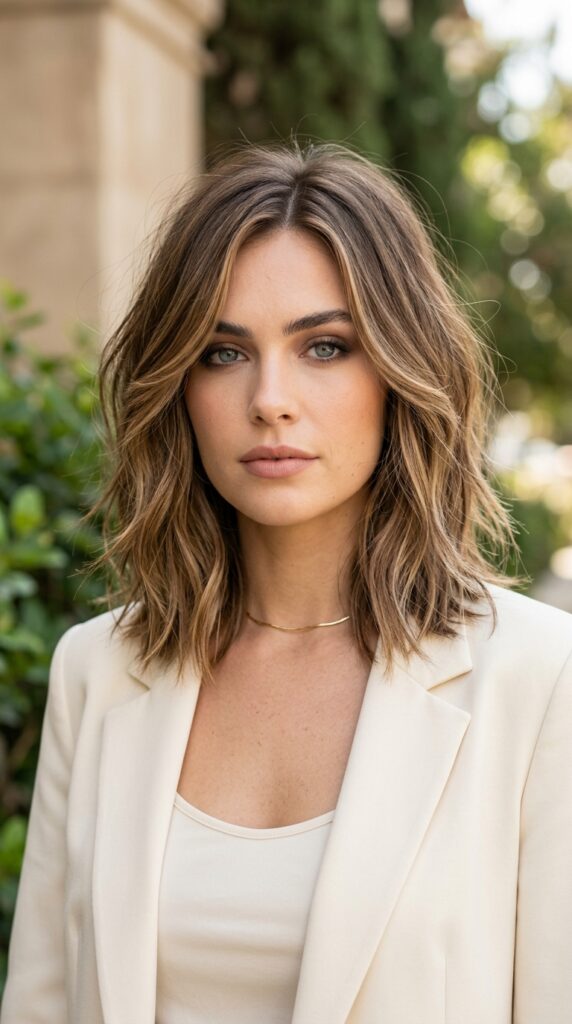
Brighter highlighted pieces placed around the face add visual fullness and dimension that thin hair often lacks when left in a single flat color. Loose waves created with a curling iron through the ends complete the overall look nicely and a purple-toned shampoo helps keep blonde highlights looking bright between color refreshes which are typically needed every twelve to fourteen weeks or so.
18. Crop with Soft Fringe
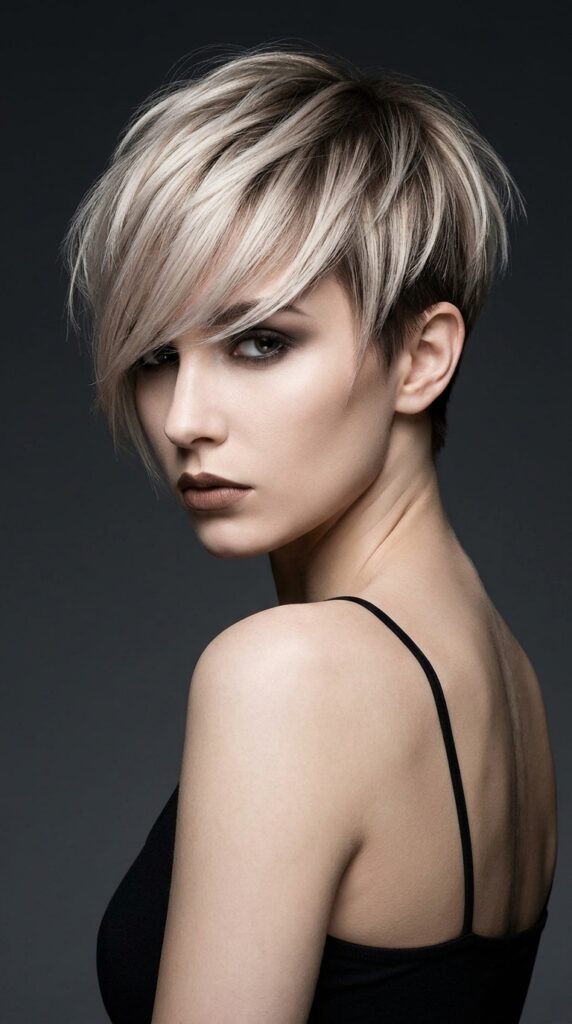
Soft wispy fringe helps distract from thinning along the hairline while keeping the crown slightly longer adds noticeable lift on top of the style. A lightweight styling cream applied to damp hair paired with a volumizing spray at the roots rounds out the full styling routine nicely. This particular shape works well across straight wavy and lightly curly hair types. Trim roughly every four weeks.
19. Layered Pixie with Side Sweep
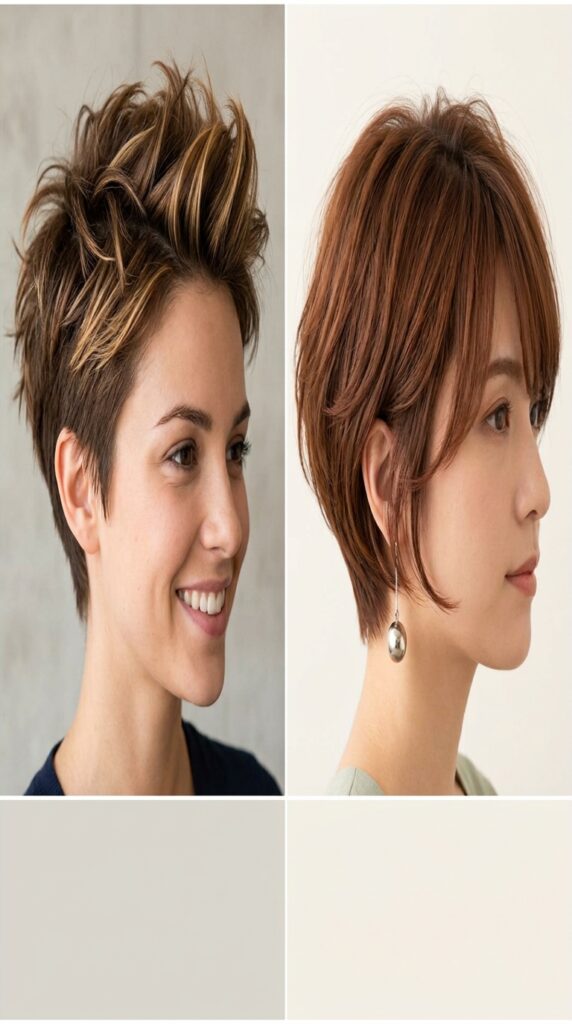
Layered sections on top swept to one side add immediate fullness and structure that thin hair genuinely benefits from throughout the day. A small amount of texture paste applied to damp hair finished with a flexible hold hairspray keeps the swept shape in place from morning through evening. Trims scheduled every four to five weeks help maintain the layering and overall structure.
20. Wavy Bob with Soft Wave Texture
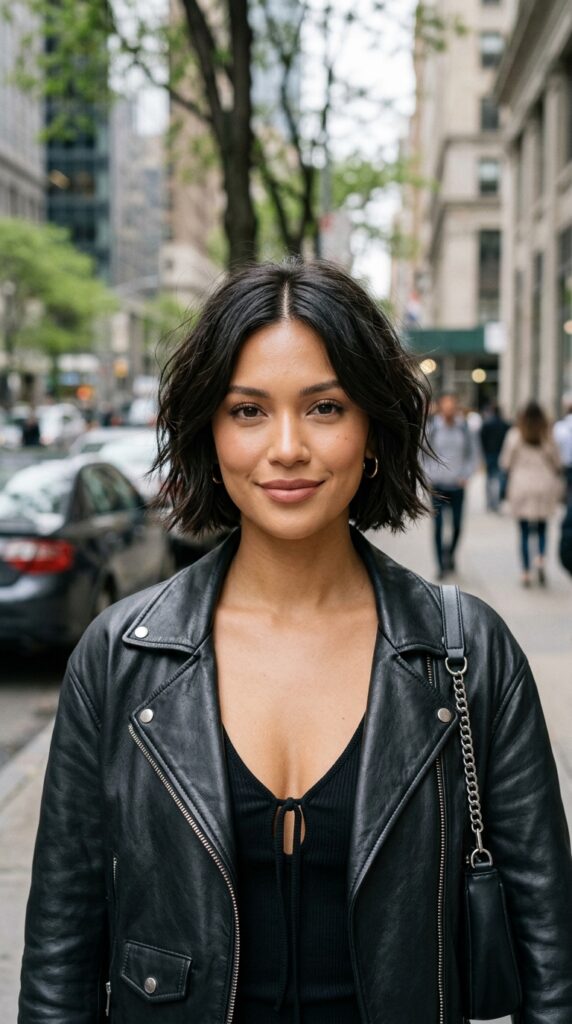
Loose waves worked throughout a chin length bob create the illusion of doubled density while still keeping the perimeter weight fully intact. A 1.25-inch curling iron used with alternating direction then locked in with a texturizing spray helps build the wave pattern effectively. Honey caramel or sandy blonde tones tend to enhance this dimensional effect nicely. Trim roughly every six weeks to maintain it.
21. Modern Crop with Tapered Sides
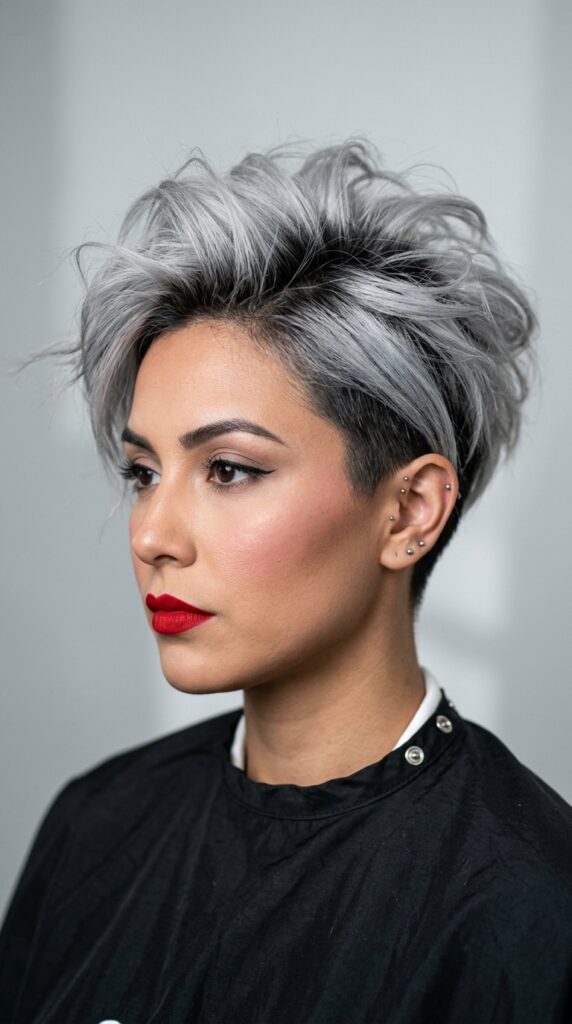
Tapered sides paired with a longer top section create a contemporary confident shape that reads modern rather than dated. A finger-styled matte clay gives the style a piecey textured finish and this particular cut tends to suit coarse wavy or curly hair textures especially well. A volumizing dry shampoo helps refresh the style between full washes trim approximately every four weeks to maintain it.
22. Soft Bob with Subtle Layers
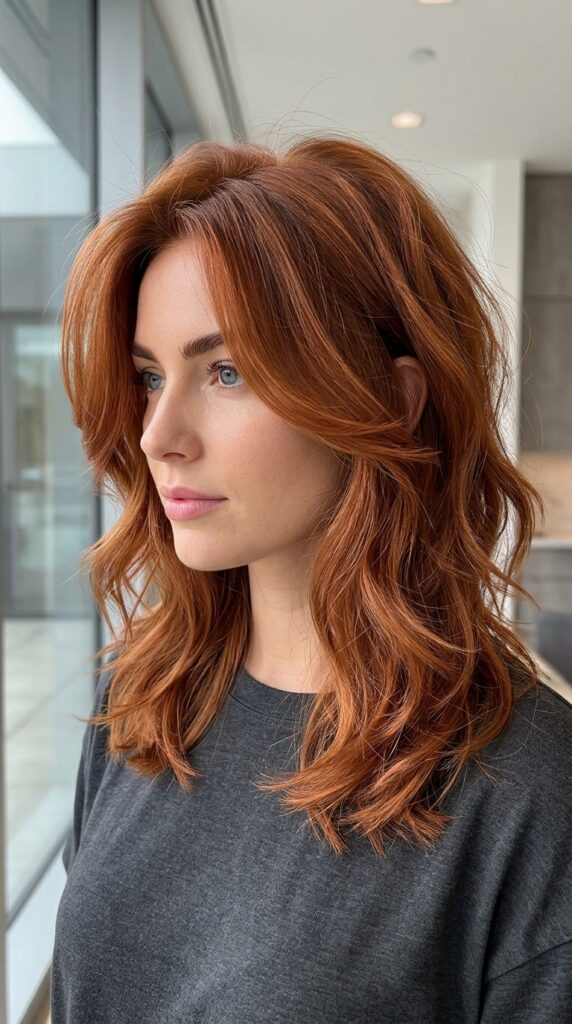
Internal layering placed through the mid lengths rather than concentrated at the very ends adds gentle movement without sacrificing too much density along the perimeter. Using a 1.25-inch round brush while blow drying creates soft natural bend throughout finished with a lightweight smoothing cream for polish. Trim roughly every six weeks to keep this softer subtly layered shape looking well maintained over time.
Frequently Asked Questions
What haircut adds the most volume for older women with thin hair?
Stacked bobs inverted bobs and pixie cuts with lifted crowns tend to add the most visible volume since they build structure and height exactly where thin hair typically falls flattest.
Should thin hair be cut in layers or kept blunt?
It depends on the goal blunt cuts maximize perimeter weight and visible thickness while strategic layering especially around the face can add movement without sacrificing too much overall density.
How often should thin hair be trimmed to maintain its shape?
Most of these cuts need trims every four to six weeks since precise lines and structured shapes tend to grow out and soften more noticeably on fine thin hair.
Are pixie cuts a good option for thinning hair?
Yes many pixie variations are specifically designed to add lift and movement through the top which can make thinning at the crown considerably less noticeable overall.
Does hair color affect how thin hair looks?
It can. Dimensional color like highlights or money pieces adds visual depth and can make hair appear fuller than it would in a single flat uniform color.
What’s the best haircut length for very fine or thinning hair?
Shorter to medium lengths such as bobs lobs and pixies generally support thin hair better than very long styles since excess length can pull hair down and flatten natural volume.
Final Thoughts
Thin hair later in life responds best to cuts built specifically around its natural texture rather than styles simply borrowed from thicker hair types. Whether it’s a structured bob a lifted pixie or a softly layered lob he se 22 options prove that flattering current styling and thinning hair aren’t at odds with one another. A skilled stylist paired with the right maintenance routine makes all the difference in keeping any of these shapes looking sharp.